EcoFlow DELTA Max 1600 Review (2026): Is Legacy NMC Still Worth Buying?
Honest 2026 review of the legacy EcoFlow DELTA Max 1600 (1,612Wh NCM, 2,000W AC): 500–800 cycle lifespan limits vs newer 3,000-cycle LiFePO4 alternatives.
The legacy EcoFlow DELTA Max 1600 delivers 1,612Wh of storage, 2,000W continuous AC output (5,000W surge; up to 2,400W–2,800W X-Boost), and 800W solar input at roughly 48 lbs—providing an estimated 1,260–1,420Wh of usable AC energy (78%–88% AC efficiency; 88%–93% DC). However, its older NCM/NMC lithium chemistry is rated for just 500–800 cycles versus 3,000–4,000 cycles on modern LiFePO4 stations like the DELTA 2 Max and BLUETTI AC200L, making it worthwhile today only on steep storm-kit clearance.

When EcoFlow originally shipped the DELTA Max 1600, a 1,612Wh battery delivering 2,000W of continuous AC power in a 48 lb chassis felt borderline revolutionary. Today, lithium iron phosphate (LiFePO4 / LFP) manufacturing scale has compressed midsize street pricing below $0.55 per watt-hour, leaving legacy nickel-cobalt-manganese (NCM / NMC) units in a tough spot on the secondhand and closeout market.
If you are weighing a steep closeout deal or refurbished listing for the EcoFlow DELTA Max 1600, the hardware specs still tell only half the story. Deciding whether it belongs in your closet requires understanding where its 2,000W inverter still punches hard—and why its 500-to-800-cycle NCM chemistry creates real depreciation traps compared to current 3,000–4,000 cycle LFP stations.
Hardware Specifications: What the Legacy DELTA Max 1600 Still Offers
Before writing off any older generation, look strictly at the electrical architecture EcoFlow built into the original US DELTA Max 1600 (19.6 × 9.5 × 12.0 in, ~48 lbs):
- Battery Pack:
1,612Wh(50.4V) NCM lithium-ion cells, expandable up to~5,644Whusing two DELTA Max Smart Extra Batteries. - Pure Sine Wave Inverter:
2,000Wcontinuous across six120VAC outlets,5,000Wpeak surge (4,600Won select international variants), and X-Boost supporting resistive appliances up to2,400W–2,800W(depending on regional/firmware rating) by lowering output voltage. - Charging Flexibility: Up to
1,600WX-Stream AC wall charging (~1.6hours full recharge) and800Wsolar MPPT input (11V–100VVoc,10A/13Amax depending on revision). - DC & USB Ports: Dual
100WUSB-C PD ports, four USB-A ports (two18Wfast-charge, two12W), one12.6V/10Acar outlet, and dualDC5521barrel ports.
Those output numbers still outperform compact sub-1kWh budget units on raw inverter headroom. A healthy 1,612Wh pack yields an estimated 1,260–1,420Wh of usable AC energy (78%–88% AC conversion window) or 1,420–1,500Wh via DC/USB-C (88%–93% efficiency)—Note: Usable AC Wh is Not Independently Verified in our third-party lab registry and reflects standard inverter conversion estimates.
What changed isn’t what the inverter can run on day one; it’s how the cells age over years two through five.
The Decisive Limitation: 500–800 Cycle NCM vs. Modern LiFePO4
The single biggest dividing line between the DELTA Max 1600 and any 2026 midsize station sits inside the battery bay. While the larger DELTA Max 2000 carried an 800-cycle rating, EcoFlow’s official user manual for the DELTA Max 1600 rates its NCM pack at 500 cycles to 80%+ capacity.
On paper, 500 cycles sounds fine if you only experience two blackouts a year. In practice, three real-world ownership realities shrink that margin:
- Daily Cycling Exhaustion: Cycling an NCM station every day in a van, cabin, or home-office time-of-use schedule eats through 500 cycles in under 17 months—whereas
3,000–4,000cycle LFP cells sustain roughly 8 to 11 years of daily use before dropping to 80% capacity. - Calendar Aging on Remaining Inventory: Because the DELTA Max 1600 left production years ago, any “new old stock” or refurbished unit sitting on a warehouse shelf has already accumulated calendar aging—capacity loss that occurs naturally in NCM cells over time even at zero cycles, especially if stored near 100% charge in warm warehouses.
- Thermal Sensitivity & Safety Margin: NCM chemistry exhibits higher energy density per pound (which is why the DELTA Max 1600 weighs
48 lbsat1.6kWh), but it carries a lower thermal runaway threshold than LiFePO4 vs. NMC batteries and degrades noticeably faster when stored or operated above90°F.
Legacy NCM vs. Current 2kWh LiFePO4 Alternatives
| Specification | EcoFlow DELTA Max 1600 (Legacy) | EcoFlow DELTA 2 Max (LFP Successor) | BLUETTI AC200L (LFP Rival) | Jackery Explorer 2000 v2 (LFP Rival) |
|---|---|---|---|---|
| Battery Capacity & Chemistry | 1,612Wh NCM |
2,048Wh LiFePO4 |
2,048Wh LiFePO4 |
2,042Wh LiFePO4 |
| Rated Cycle Life | 500–800 cycles to 80% | 3,000+ cycles to 80% | 3,000+ cycles to 80% | 4,000 cycles to >=70% |
| Continuous AC / Surge | 2,000W / 5,000W surge (2,400W–2,800W X-Boost) |
2,400W / 4,800W surge (3,400W X-Boost) |
2,400W / 3,600W Power Lifting |
2,200W / 4,400W surge |
| Solar Input Ceiling | 800W (11V–100V Voc) |
1,000W dual MPPT (11V–60V) |
1,200W (12V–145V Voc) |
400W (16V–60V DC8020) |
| Weight | 48 lbs |
50 lbs |
62.4 lbs |
39.5 lbs |
| Expandability | Up to ~5.6kWh (older NCM packs) |
Up to 6,144Wh (LFP packs) |
Up to 8,192Wh (B210/B300K) |
Non-expandable |
| US Warranty & Status | Discontinued / Refurb (short warranty) | 5-Year Warranty (Current) | 5-Year Warranty (Current) | 5-Year Warranty (3+2 yr) |
Look closely at the weight and warranty column. For only 2 extra pounds (50 lbs vs. 48 lbs), the DELTA 2 Max delivers 27% more capacity (2,048Wh), 20% higher continuous AC output (2,400W), dual independent solar MPPT channels (1,000W), and 6× the rated cycle life backed by a full 5-year warranty. Meanwhile, the Jackery Explorer 2000 v2 actually undercuts the DELTA Max 1600’s weight by 8.5 lbs (39.5 lbs) while stuffing 2,042Wh of LFP inside!
Real-World Usability & Common Misconceptions
Older blog reviews frequently glorified running NCM power stations outdoors in rain, mud splashes, and desert heat. In reality, none of the EcoFlow DELTA Max units carry a waterproof IP rating. Exposing cooling intake vents to windblown dust, mud, or moisture risks shorting high-voltage inverter boards and accelerates battery cell degradation. Always operate portable power stations on dry, shaded, elevated surfaces with unobstructed vent airflow—never exposed to precipitation.
Another recurring surprise on older EcoFlow firmware is AC inverter standby consumption. Leaving the 2,000W inverter switched on overnight with little or no load still consumes internal quiescent power (often 20W–30W+), which can drop a 1,612Wh battery by 10%–18% by morning before your refrigerator compressor even cycles frequently. If you only need overnight phone charging, DC router backup, or a 12V cooler, switching the AC outlets off and running strictly from USB-C or the 12V socket raises efficiency into the 88%–93% DC range.
For multi-day refrigerator outages, remember what CNET Labs observed across competing architectures: efficient midsize LFP systems like the BLUETTI AC200L achieved 77.76% round-trip efficiency and exceeded 29 hours on a standardized refrigerator test, demonstrating how newer BMS and inverter tuning cuts idle waste.
When a Discounted DELTA Max 1600 Still Makes Sense vs. When to Skip It
Evaluating legacy hardware comes down to cost per usable watt-hour and warranty confidence. Check your numbers in our Price per Wh Calculator before pulling the trigger.
Buy a Deeply Discounted / Refurbished DELTA Max 1600 Only If:
- Street Price Drops Below ~$450–$525 (
<$0.33/Wh): Once street pricing creeps above$600, it collides directly with current-gen LFP sales on the EcoFlow DELTA 3 Plus (~$599–$699street) or sub-$1,0002kWh LFP promos. - Strictly Infrequent Seasonal Storm Backup: You plan to charge it 5–15 times a year for brief summer thunderstorm or winter ice-storm outages, keep it indoors at
60°F–75°F, and recharge after use. - You Need
800W100VSolar Input on a Shoestring Budget: Its11V–100VMPPT window handles slightly higher series panel voltages than modern60V1kWh units.
Step Up to LiFePO4 Instead If:
- You Cycle Regularly (RVing, Van Life, Cabins, Daily Peak-Shaving): NCM wear and shorter warranty terms on closeout stock erase any initial savings within two years.
- You Need a True Workstation UPS or Native 30A RV Port: The DELTA Max 1600 lacks sub-10ms HID UPS protection (unlike the
DELTA 3 Plus) and omits a nativeTT-30RRV socket (standard on theBLUETTI AC200L). - You Want Long-Term Expandability: Buying legacy NCM Smart Extra Batteries ties more money into an aging platform rather than modular
3,000–4,000-cycle LFP packs.
For most buyers in 2026, skipping the legacy NCM clearance bin in favor of the BLUETTI AC200L, Jackery Explorer 2000 v2, or EcoFlow DELTA 3 Plus delivers dramatically lower lifetime cost per cycle, stronger warranty protection, and safer thermal chemistry. If you want help sizing your exact outage appliances first, review How to Choose a Portable Power Station.
Models Discussed in This Article

BLUETTI AC200L
Combines a high-efficiency 2,048Wh expandable platform, 1,200W high-voltage solar input (12–145V), and dedicated 30A TT-30R + 48V DC RV outputs at strong street pricing, trading away light weight and built-in wheels.
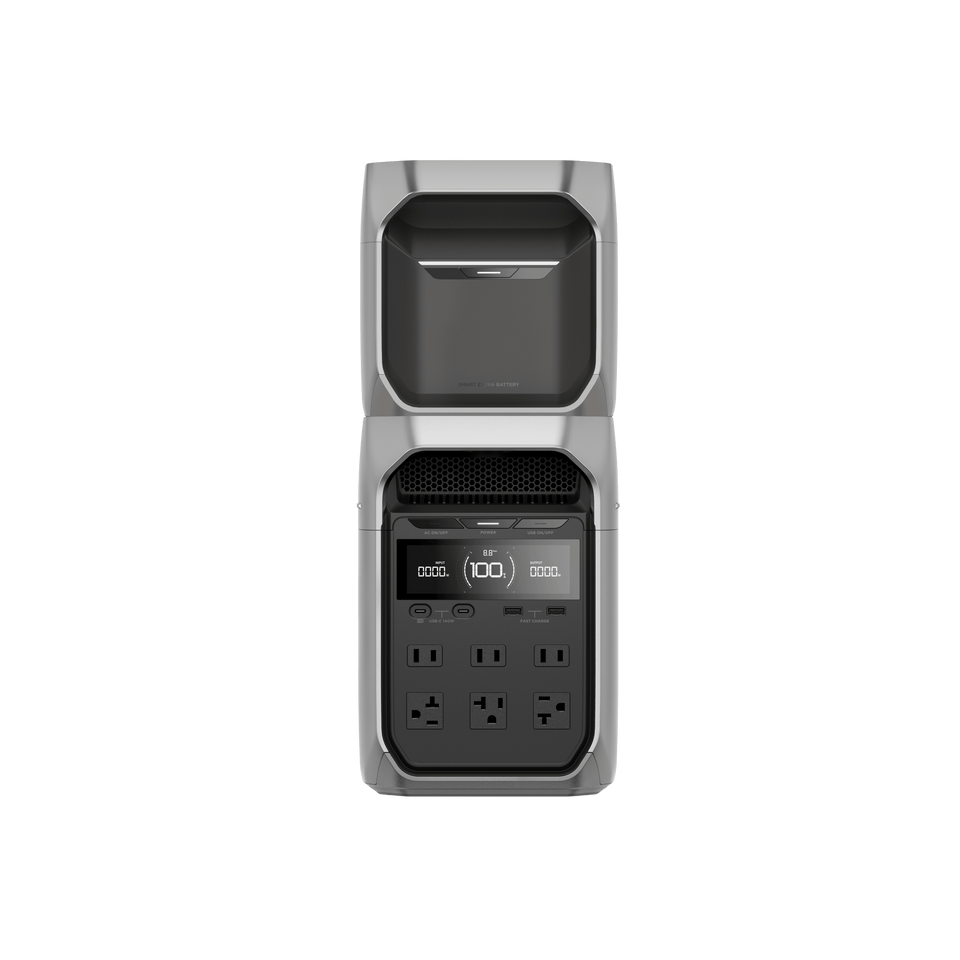
EcoFlow DELTA 3 Plus
Packs 1,000W dual-MPPT solar charging, sub-1-hour AC replenishment, and a sub-10 ms HID-capable UPS into a 27.6 lb chassis, making it more versatile than non-Plus 1kWh units.
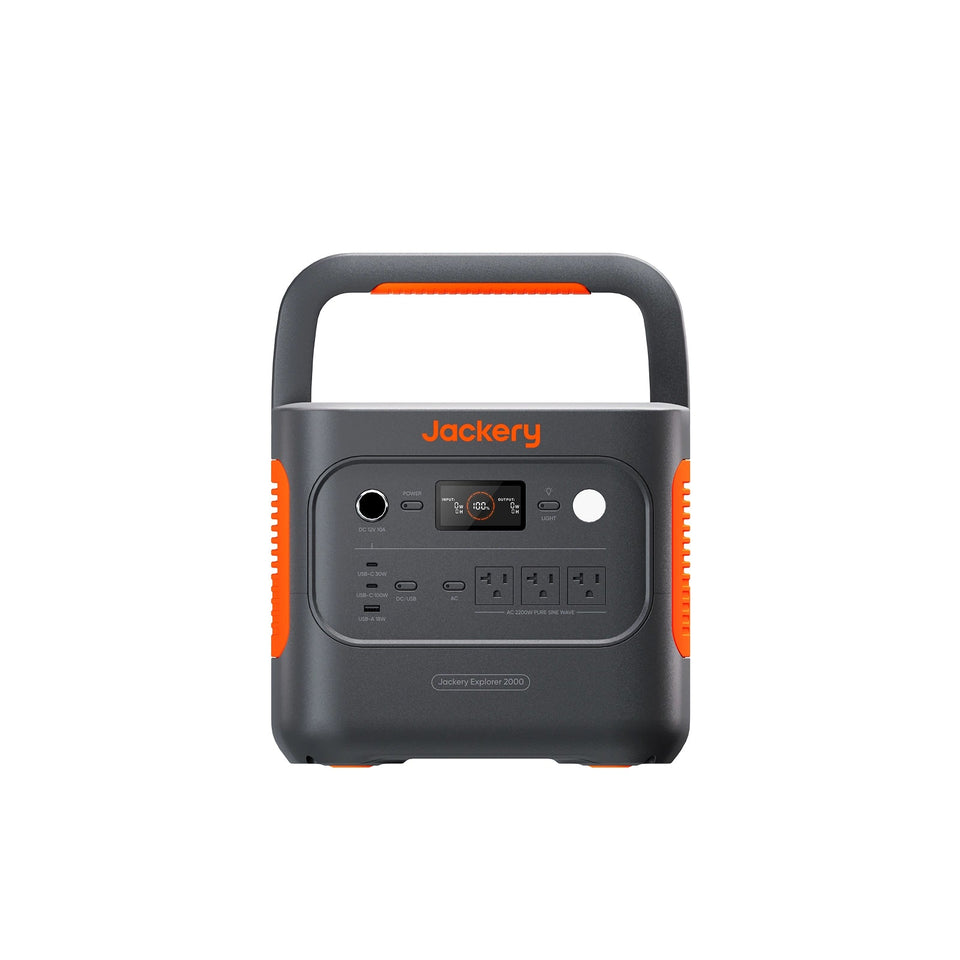
Jackery Explorer 2000 v2
A breakthrough 39.5 lb chassis makes 2,042Wh genuinely single-hand portable for camping and apartments, provided you accept its 400W solar recharge ceiling and non-expandable battery.
Frequently Asked Questions
How many cycles is the legacy EcoFlow DELTA Max 1600 rated for?+
EcoFlow's manual specifications for the DELTA Max 1600 list 500 cycles to 80%+ capacity using NCM (nickel cobalt manganese) lithium-ion cells, while its sibling DELTA Max 2000 was rated up to 800 cycles to 80%. By comparison, modern LiFePO4 replacements such as the DELTA 2 Max and BLUETTI AC200L are rated for 3,000+ cycles to 80%.
What is the real usable AC runtime of a 1,612Wh DELTA Max 1600?+
Because independent third-party discharge figures for the legacy 1600 model are not verified in our source registry, apply standard inverter conversion estimates: roughly 78%–88% usable AC output (~1,260–1,420 Wh before inverter cutoff) or 88%–93% via direct 12V DC and USB-C ports. Older used units may yield less due to calendar aging.
Is buying a refurbished EcoFlow DELTA Max 1600 safe for an emergency storm kit?+
Yes, if purchased at a heavy discount for infrequent seasonal outage backup and stored indoors at moderate room temperatures around 50%–60% state of charge. However, never leave a non-weatherproof power station exposed outdoors to rain, mud, or intense heat, and avoid buying a heavily cycled used NCM unit with unknown battery health.
What replaced the EcoFlow DELTA Max 1600?+
EcoFlow replaced the NCM DELTA Max generation with the LiFePO4-based DELTA 2 Max (2,048Wh, 2,400W continuous AC, dual 500W MPPT solar, 3,000 cycles) and expanded the compact tier with the DELTA 3 Plus (1,024Wh, 1,800W AC, 4,000 cycles). Competing 2kWh LFP alternatives include the BLUETTI AC200L and Jackery Explorer 2000 v2.
Sources & Technical References
- View Source →[1]Manufacturer SpecificationEcoFlow US OfficialVerified 2026-11-25EcoFlow DELTA 2 Max Portable Power Station Specifications
2,048Wh LFP expandable to 6,144Wh, 2,400W continuous AC, and dual 500W (1,000W combined) MPPT solar inputs.
- View Source →[2]Manufacturer SpecificationBLUETTI US OfficialVerified 2026-11-24BLUETTI AC200L Portable Power Station Official Specifications
2,048Wh LFP, 2,400W continuous AC, 3,600W Power Lifting mode, NEMA TT-30R + 48V/8A DC RV port, 1,200W solar (12-145V).
- View Source →[3]Manufacturer SpecificationEcoFlow US OfficialVerified 2026-11-24EcoFlow DELTA 3 Plus Official Specifications
1,024Wh LFP, 1,800W continuous AC, 1,000W dual 500W MPPT solar, <10ms UPS, 1,500W X-Stream AC charging.
- View Source →[4]Third-Party Independent ReviewCNETVerified 2026-11-24CNET Portable Power Station Lab Efficiency & Refrigerator Runtime Benchmarks
Documents standardized refrigerator runtime and round-trip efficiency testing including BLUETTI AC200L (77.76% RTE, >29h fridge test) and Anker SOLIX F3800 (~25.68h fridge stress runtime due to dual-voltage inverter overhead).