EcoFlow WAVE 2 vs. ZERO BREEZE Mark 2 (2026): 5,100 BTU vs. 2,300 BTU Cooling Comparison
Compare EcoFlow WAVE 2 (5,100 BTU AC/heat, 32 lbs) vs. ZERO BREEZE Mark 2 (2,300 BTU, 16.5 lbs, 240W 24V DC) for vanlife, rooftop tents, and battery runtime.
EcoFlow WAVE 2 (5,100 BTU cooling / 6,100 BTU heating, 32 lbs standalone, ~495W–550W Max) delivers more than double the thermal capacity of the ZERO BREEZE Mark 2 (2,300 BTU cooling-only, 16.5 lbs standalone, ~240W Strong / ~100W–150W Sleep on 24V DC). Rooftop tents and small solar budgets gain longer runtime from Mark 2's 240W draw and off-unit swappable 840Wh batteries, while camper vans in humid heat or cold mornings need WAVE 2.

Campers shopping for off-grid air conditioning run straight into a brutal physics trade-off: cooling capacity (BTU/hr) versus watt-hours (Wh). Put a 5,100 BTU portable AC on a modest 1,024Wh battery at full blast and the compressor exhausts the cells in roughly two hours; put a 2,300 BTU micro-cooler inside a sun-baked cargo van and the interior stays 88°F all afternoon.
That exact engineering split defines the matchup between the EcoFlow WAVE 2 (5,100 BTU cooling / 6,100 BTU heating, 32.0 lbs standalone) and the ZERO BREEZE Mark 2 (2,300 BTU cooling-only, 16.5 lbs standalone). Both designs have seen newer successors enter the market (WAVE 3 and Mark 3), yet WAVE 2 and Mark 2 remain widely cross-shopped across clearance, overland, and used channels—and their underlying compressor architectures illustrate two completely different approaches to off-grid climate control.
Manufacturer Specifications: 5,100 BTU Hybrid vs. 2,300 BTU Micro-Specialist
| Specification | EcoFlow WAVE 2 | ZERO BREEZE Mark 2 |
|---|---|---|
| Cooling Output | 5,100 BTU/hr (1,500W thermal) |
2,300 BTU/hr |
| Heating Mode | 6,100 BTU/hr (1,800W thermal R290 heat pump) |
None (cooling + fan only) |
| Unit Weight (No Battery) | 32.0 lbs (14.5 kg) |
16.5 lbs (7.5 kg) |
| Weight With Native Dock Battery | ~49 lbs (+17 lb 1,159Wh NCM dock) |
~28.5 lbs (+12 lb 840Wh 24V dock) |
| Chassis Dimensions | 20.4 × 11.7 × 13.2 in |
20.0 × 10.0 × 11.0 in |
| Compressor & Refrigerant | Variable inverter compressor (R290) |
24V DC rotary micro-compressor (R134a) |
| Power Consumption Profile | ~495W DC / ~550W AC Max; ~200–350W Eco |
~240W Strong; ~150–200W Cool; ~100–150W Sleep |
| Ventilation System | Dual-hose (5.9 in intake / 5.0 in exhaust) |
Dual-hose rear condenser ducts |
| Sound Rating | 44–56 dB (mode dependent) |
~52 dB(A) |
| Dock Battery Charge Architecture | Charges only while attached to WAVE 2 | Detaches to charge independently of AC unit |
| App Telemetry & Control | Wi-Fi & Bluetooth via EcoFlow App | On-unit physical controls / IR remote |
Notice the sheer physical contrast right away: ZERO BREEZE Mark 2 weighs half as much (16.5 lbs vs. 32.0 lbs) and runs at roughly half the peak electrical draw (~240W vs. ~495W–550W), because its miniature 24V rotary compressor moves less than half the thermal energy (2,300 BTU vs. 5,100 BTU).
Power Draw & Battery Endurance: Why 240W Changes Overnight Math
For weekend overlanders carrying a single 1,024Wh portable power station—such as the EcoFlow DELTA 3 Plus—or relying on a clip-on dock battery, hourly watt draw dictates whether you sleep comfortably until dawn or wake up sweating at 2:00 a.m.
Using standard engineering conversion ranges (88%–93% on native DC battery paths versus 78%–88% when converting battery DC to 120V AC into an AC adapter), realistic runtime breaks down as follows:
| Power Source & Path Efficiency | ZERO BREEZE Mark 2 (~240W Strong / ~130W Sleep) |
EcoFlow WAVE 2 (~495W–550W Max / ~250W–300W Eco) |
|---|---|---|
Native Dock Battery (840Wh Mark 2 vs. 1,159Wh WAVE 2 DC) |
~3.0–3.5 hrs Strong / ~5.5–8.0 hrs Sleep |
~2.1–2.3 hrs Max / ~4.0–7.5 hrs Eco |
1,024Wh AC Power Station (78%–88% AC usable: 799–901Wh) |
~3.3–3.7 hrs Strong / ~6.1–6.9 hrs Sleep |
~1.4–1.6 hrs Max / ~2.7–3.6 hrs Eco |
2,048Wh LFP Station (e.g., BLUETTI AC200L / Jackery 2000 v2) |
~6.6–7.5 hrs Strong / ~12–13.8 hrs Sleep |
~2.9–3.3 hrs Max / ~5.3–7.2 hrs Eco |
(Note: Mark 2 also runs directly off 24V DC power sources or a step-up DC converter, cutting AC inverter losses cleanly; WAVE 2 recovers ~10%–15% efficiency when driven over XT150 DC instead of its 120V plug.)
Daytime Solar Sustainability (400W Panel Reality)
Under NREL field irradiance curves (detailed in How Long to Charge a Power Station with Solar), a 400W portable solar array realistically produces 280W–330W during clear midday hours after panel heat and angle losses:
- ZERO BREEZE Mark 2 (
~240WStrong): A400Wsolar panel feeding a1kWh–2kWhpower station delivers a net positive charge even while Mark 2 runs at fullStrongcooling output at noon. - EcoFlow WAVE 2 (
~495W–550WMax): UnderMaxcooling,400Wsolar panels still run a165W–270Whourly deficit—meaning midday solar only extends battery runtime unless you shift WAVE 2 down toEcocycling (~200W–300W) or step up to800W–1,200Wsolar arrays like the1,200WMPPT controller on the BLUETTI AC200L.
Plug your exact battery capacity and camping solar wattage into our Runtime Calculator to stress-test hot-night vs. cool-night scenarios.
Thermal Envelope: Rooftop Tents vs. Metal Camper Vans
Higher efficiency means nothing if the BTU output cannot beat ambient heat entering your shelter. Evaluating shelter insulation and air volume separates the two units cleanly:
Where ZERO BREEZE Mark 2 (2,300 BTU) Wins
- Rooftop Tents, Ground Swags & Compact 2-Person Tents: Hoisting
16.5 lbs(or28.5 lbswith battery) up a rooftop tent ladder is vastly easier than wrestling a49 lbWAVE 2 bundle. Inside a compact tent sleeping envelope, aiming the cold nozzle directly across the pillow zone drops perceived body heat immediately without tripping small1,000Whbattery banks. - Teardrop Campers & Truck-Bed Toppers (Shaded): Insulated teardrop cabins roughly
4×8 fthold minimal air volume, allowing2,300 BTUto take the edge off warm nights—especially when pre-cooled before dusk. - Multi-Battery Hot-Swap Off-Grid Loops: Because ZERO BREEZE’s
840Wh(24V 35Ah) battery detaches to charge from a vehicle alternator or folding solar panel while another battery runs the compressor, minimalist overland rigs avoid carrying a60 lbpower station entirely.
Where EcoFlow WAVE 2 (5,100 BTU + 6,100 BTU Heat) Wins
- Insulated Camper Vans & Small RVs (
~80–107 sq ft): Sheet-metal vans absorb massive radiant solar load through roofs and glass. Moving5,100 BTUof heat—plus stronger blower CFM—allows WAVE 2 to actually cool an entire enclosed van interior in90°F+weather, whereas2,300 BTUonly serves as a personal spot breeze. - Humid Coastal & Southern Climates: High humidity eats BTU capacity rapidly because energy goes into condensing water out of damp air before air temperature drops. WAVE 2’s extra
2,800 BTUthermal margin handles muggy Gulf Coast or Midwest nights far better—and its<70% RHNo-Drain evaporation handles moderate nights without constant bottle emptying. - Four-Season & Mountain Camping: ZERO BREEZE Mark 2 cannot heat. EcoFlow WAVE 2 flips into a
6,100 BTUreverse-cycle heat pump (~540W DC / 600W AC), warming chilly45°Fmountain mornings cleanly before sunrise (drain hose connected).
(Consult our RV Power Station Compatibility Guide for full van shore-power, alternator, and dual-hose window insert best practices.)
Practical Hardware & Logistics Trade-Offs
Before choosing between clearance WAVE 2 stock and a ZERO BREEZE Mark 2 kit, keep three everyday usability details in view:
- In-Unit vs. Off-Unit Battery Charging: WAVE 2’s
1,159WhNCM add-on battery (~800cycles) cannot charge alone unless docked under the32 lbAC unit. If you rely on a stationary2,048WhLiFePO4 station instead (3,000+cycles, usable for kitchen gear year-round), skipping WAVE 2’s proprietary add-on battery often makes better long-term financial sense. - Duct Setup Speed & Placement Flexibility: ZERO BREEZE Mark 2 mounts cleanly on a narrow shelf or rear hatch floor (
20 × 10 × 11 in) with flexible small-diameter rear hoses. WAVE 2’s larger5.9-inchintake and5.0-inchexhaust hoses require stiffer window shrouds (Tera Wagonor custom foam inserts), taking an extra minute to seat securely—though that wider duct airflow keeps compressor head pressure lower. - App Automation vs. Tactile Simplicity: WAVE 2 includes Wi-Fi/Bluetooth thermostat timers and battery-saving cutoff automation via the EcoFlow App; ZERO BREEZE Mark 2 relies on simple physical buttons and a handheld IR remote with zero wireless connectivity dependencies.
Verdict: Matching the Compressor to Your Rig
- Buy the ZERO BREEZE Mark 2 (
2,300 BTU) if: You camp in rooftop tents, compact ground tents, or shaded teardrops, haul gear up ladders or down trails (16.5 lbs), run off a1,024Whpower station or400Wportable solar kit, or value detaching spare840Whbatteries to charge separately while cooling. - Buy the EcoFlow WAVE 2 (
5,100 BTU/6,100 BTUHeat) if: You cool an insulated camper van, truck sleeper, or small cabin, travel through high-humidity summer heat, want electric heat-pump warmth on crisp mornings, and carry2,048Wh+of LiFePO4 storage (like theBLUETTI AC200Lor EcoFlowDELTA 2 MaxviaXT150DC) to feed its compressor without battery anxiety.
Models Discussed in This Article
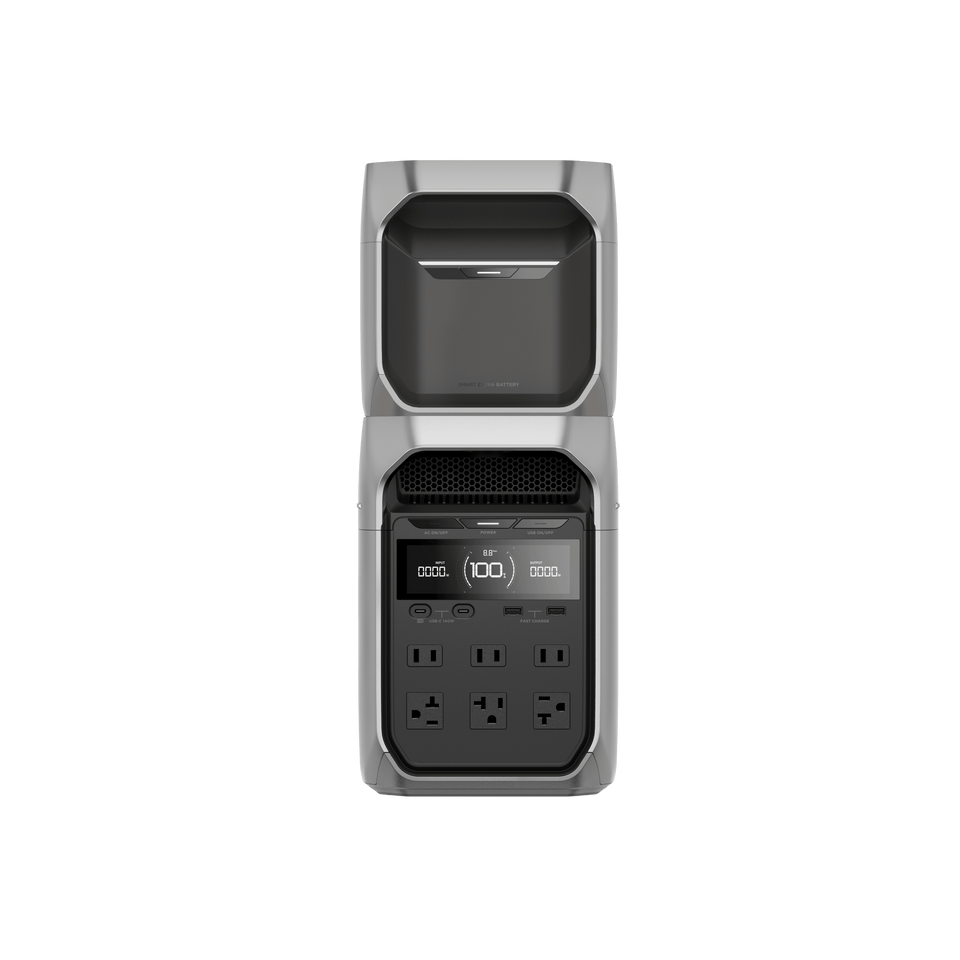
EcoFlow DELTA 3 Plus
Packs 1,000W dual-MPPT solar charging, sub-1-hour AC replenishment, and a sub-10 ms HID-capable UPS into a 27.6 lb chassis, making it more versatile than non-Plus 1kWh units.
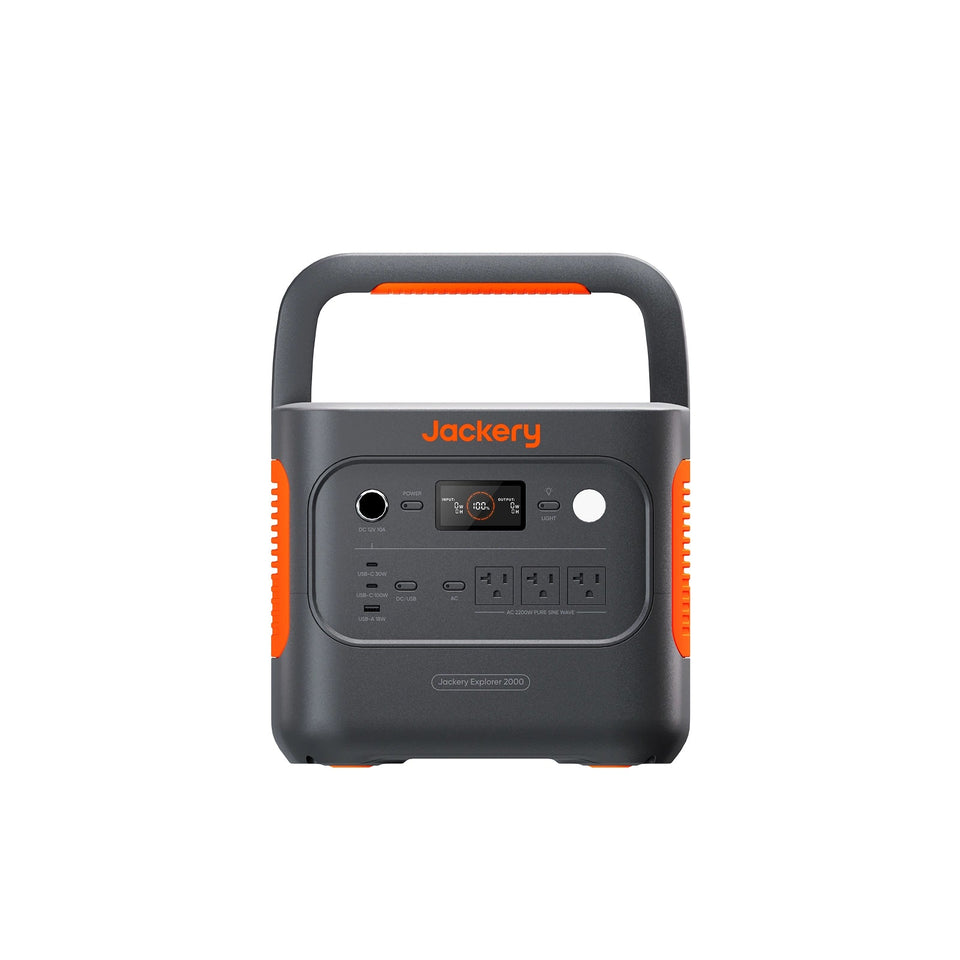
Jackery Explorer 2000 v2
A breakthrough 39.5 lb chassis makes 2,042Wh genuinely single-hand portable for camping and apartments, provided you accept its 400W solar recharge ceiling and non-expandable battery.

BLUETTI AC200L
Combines a high-efficiency 2,048Wh expandable platform, 1,200W high-voltage solar input (12–145V), and dedicated 30A TT-30R + 48V DC RV outputs at strong street pricing, trading away light weight and built-in wheels.
Frequently Asked Questions
Can the 2,300 BTU ZERO BREEZE Mark 2 cool an entire camper van in summer sun?+
No. At 2,300 BTU/hr, the Mark 2 works well as a personal spot cooler aimed across a bed or inside an insulated teardrop/rooftop tent, but solar heat gain through metal van walls and windshields rapidly overwhelms 2,300 BTUs. Insulated camper vans typically require 5,100 BTU units like the EcoFlow WAVE 2 (or newer 6,100 BTU WAVE 3).
Why does ZERO BREEZE Mark 2 run longer than EcoFlow WAVE 2 on a 1,000Wh power station?+
ZERO BREEZE Mark 2 uses a miniature 24V rotary micro-compressor capped around ~240W in Strong mode and ~100W–150W in Sleep mode—roughly half the ~495W–550W Max draw of the WAVE 2. That lower ceiling lets a 1,024Wh power station sustain Mark 2 through a full night of cooling.
Which portable AC allows charging spare batteries off the unit while cooling?+
ZERO BREEZE Mark 2 allows its 12 lb (840Wh) 24V dock battery to be detached and charged separately from AC, solar, or vehicle DC while a second battery powers the unit. The EcoFlow WAVE 2 requires its 1,159Wh add-on battery to stay clipped onto the AC chassis to charge (or use an external EcoFlow power station).
Do both EcoFlow WAVE 2 and ZERO BREEZE Mark 2 use dual-hose ventilation?+
Yes. Both models provide separate intake and exhaust ducts for the condenser side so they do not pull warm outside air into a tent or sleeper cab through negative pressure—making duct routing and hose insulation equally important on both machines.
Sources & Technical References
- View Source →[1]Manufacturer SpecificationEcoFlow US OfficialVerified 2026-11-25EcoFlow WAVE 2 Portable Air Conditioner & Heater Specs
5,100 BTU cooling / 6,100 BTU heating unit with optional 1,159Wh LFP add-on battery pack and DC XT150 efficiency integration.
- View Source →[2]Manufacturer SpecificationZERO BREEZE OfficialVerified 2026-11-25ZERO BREEZE Mark 2 Portable Air Conditioner Specifications
2,300 BTU 24V DC micro-compressor portable cooling system drawing ~240W average with 840Wh Li-ion dock battery option.
- View Source →[3]Manufacturer SpecificationEcoFlow US OfficialVerified 2026-11-24EcoFlow DELTA 3 Plus Official Specifications
1,024Wh LFP, 1,800W continuous AC, 1,000W dual 500W MPPT solar, <10ms UPS, 1,500W X-Stream AC charging.
- View Source →[4]Government Research ResourceNational Renewable Energy Laboratory (NREL)Verified 2026-11-24PVWatts & US Peak Sun Hours Reference Data
Documents regional peak sun hours and real-world photovoltaic derating factors (ambient heat, angle, shading, controller loss).