Best Solar Generators for Off-Grid Living (2026): Cabin, Homestead & Vanlife Sizing
Off-grid solar generator sizing guide for cabins, homesteads, and vans: 80-450V vs 12-145V MPPT, -4°F self-heating vs 32°F cutoffs, and NREL winter solar math.
True off-grid living requires matching 2–3 days of battery autonomy (6kWh–30kWh+ for cabins, 1.5kWh–4kWh for camper vans) to regional winter solar irradiance and High-PV Voc limits. EcoFlow DELTA Pro Ultra leads cold-climate homesteads with 80V–450V MPPT (5,600W max) and -4°F self-heating, Jackery Explorer 5000 Plus delivers 14,400W motor surge, and BLUETTI AC200L or Pecron E1500LFP excel in 120V/DC vans—delivering ~78%–88% usable AC or ~88%–93% direct DC.

An off-grid cabin that feels effortless in July—when 5.5 hours of overhead sunshine flood every roof panel—routinely collapses into a dark emergency in December. Short winter days slice usable sunlight nearly in half, while a 28°F unheated utility shed triggers low-temperature BMS charging lockouts that reject incoming solar power right as sunrise hits.
Unlike weekend emergency backup, full-time off-grid living exposes every weak spec on a datasheet: narrow solar voltage ceilings, heavy inverter idle losses, rigid 32°F freeze lockouts, and single-day battery reserves. Sizing a sustainable cabin, homestead, or camper van around 2026 LiFePO4 architectures means evaluating solar array voltage, cold-weather protection, and multi-day stack scaling before spending a dollar.

Off-Grid Hardware Matrix: Homesteads vs. Cabins vs. Camper Vans
Modern off-grid plug-and-play power stations split cleanly into three deployment scales based on MPPT solar voltage window, cold-climate heating, and battery stack ceiling:
| Model & Best Off-Grid Tier | Base -> Max Expandable Wh | Continuous AC / Surge | Solar Input & Voc Range | Charge Temp Cutoff | Notable Off-Grid Advantage / Limit |
|---|---|---|---|---|---|
| EcoFlow DELTA Pro Ultra (Cold-Climate Homesteads) | 6,144Wh -> 30.7kWh (90kWh 3× inv) |
7,200W / 10,800W (120V/240V) |
5,600W (80–450V High + 30–150V Low) |
-4°F to 113°F (Auto self-heating) |
Only model in class with integrated -4°F self-heating & 5.6kW dual-PV; high base kit price. |
| Jackery Explorer 5000 Plus (High-Surge Well-Pump Cabins) | 5,040Wh -> 30.2kWh (60.5kWh 2× inv) |
7,200W / 14,400W (120V/240V) |
4,000W High-PV (135–450V) + 1,200W Low |
32°F to 113°F (Unheated) |
Huge 14,400W surge & ~$2,999 base value; 135V High-PV floor requires larger strings. |
| BLUETTI AC200L (120V Cabin & RV/Van Hub) | 2,048Wh -> 8,192Wh (B300K) |
2,400W / 3,600W (120V + TT-30R) |
1,200W (12–145V Voc) |
32°F to 104°F (Unheated) |
CNET 77.76% RTE / >29h fridge test; 48V/8A DC port; heavy 62.4 lb unwheeled lift. |
| Pecron E1500LFP (Budget Vanlife & Small Sheds) | 1,536Wh -> 7,680Wh (EP3000-48V) |
2,200W / 4,400W (120V) |
800W (32–95V GX16MF + 12–18V) |
32°F to 113°F (Unheated) |
~$599 street value + 12V/30A XT60 DC output; 32V minimum on main solar port. |
(For high-flexibility 240V off-grid cabins using 12V–150V solar arrays up to 3,000W, the 4,608Wh Zendure SuperBase V4600 also warrants consideration, though its 3,800W single-unit inverter and 3-year US warranty sit behind EcoFlow and Jackery.)
High-PV (80–450V) vs. Mid-Voltage (12–145V) Solar Array Compatibility
Off-grid living fails fast when you buy cheap rigid 350W–450W residential solar panels off a warehouse pallet, only to discover your portable power station tops out at 60V Voc (as on older portable units or the original Anker SOLIX F3800).
Understanding your MPPT’s Open-Circuit Voltage (Voc) operating window solves both array cost and cable distance:
80V–450V/135V–450VHigh-PV Inputs (DPU & Jackery 5000 Plus): Residential400Wsolar panels typically carry~37V–49V Voceach. High-voltageMPPTports let solar installers wire multi-panel ground racks or cabin roof arrays cleanly up to4,000Wper input without heavy parallel combiner boxes or thick copper runs over 50–100 feet. Pay close attention to the startup voltage floor: the DELTA Pro Ultra wakes at80V, whereas the Explorer 5000 Plus requires135Von its High-PV port (leaving smaller 1–2 panel camp setups restricted to its16V–60VLow-PV jacks).12V–145VWide-Range MPPT (BLUETTI AC200L): For off-grid camper vans and small cabins,12V–145V Voc(15A,1,200Wmax) is remarkably forgiving. Whether you mount flat12V-nominal van roof panels or ground-mount two to three residential400Wpanels (~110Vcombined Voc warm), the AC200L tracks cleanly.- Cold-Weather Voltage Margin Rule: Every solar panel’s
Vocrises as ambient air drops below freezing (77°FSTC baseline). Never exceed the controller’s publishedVocceiling—leave at least a15%–20%winter voltage buffer and consult panel datasheets plus your station’s manual before connecting any array (see Solar Input Limits & MPPT Explained).
Winter Sub-Freezing Physics: -4°F Self-Heating vs. 32°F Cutoff
Almost every LiFePO4 (LFP) battery discharges comfortably down to -4°F or 5°F, which tricks first-time cabin builders into leaving units in uninsulated sheds. The bottleneck isn’t discharging—it’s charging. Attempting to push solar or AC current into LFP cells below 32°F (0°C) causes metallic lithium plating on the anode, permanently destroying cell health and creating safety hazards. Consequently, internal Battery Management Systems (BMS) automatically block all charge current near freezing:
- Unheated Standard Units (
32°FCutoff): TheJackery Explorer 5000 Plus,BLUETTI AC200L,Pecron E1500LFP, andAnker SOLIX F3800all list32°F (0°C)as their minimum charging temperature. In cold climates, these units must reside inside a heated, insulated living space or thermal-regulated utility room—never an unheated barn or freezing roof locker. - Self-Heating Architecture (
-4°FRated): The EcoFlow DELTA Pro Ultra is specifically engineered with automated internal battery heating down to-4°F (-20°C), drawing minimal input power to warm LFP cells above freezing before allowing full charge current. For weekend winter cabins that drop below freezing between visits, automatic self-heating prevents arriving to a dead battery bank that refuses midday solar recharge (review Battery Storage, Temperature & Safety Guide).
NREL Seasonal Solar Derating & 2–3 Day Autonomy Math
Never size an off-grid system using summer sunshine divided by 100% panel nameplate watts. NREL PVWatts irradiance models highlight two massive seasonal penalties across northern and forested US properties:
- Field Panel Derating (
58%–75%STC): Heat, flat RV roof angles, winter low-sun elevation, wiring drop, and MPPT conversion reduce real midday harvest to roughly60%–75%of label ratings (~70%solid clear-sky planning average). - Winter Peak Sun Hour Collapse: While Phoenix or San Diego enjoys
~5.0–5.8 PSHmuch of the year, Midwest, Northeast, and Pacific Northwest homesteads routinely drop to2.0–3.5 PSHin December–January—often paired with 48 to 72 hours of solid storm cloud cover.
| Daily Off-Grid Load Profile | Realistic Winter Harvest Needed (2.5–3.5 PSH @ 70% Derate) |
Recommended Solar Array (STC) |
Recommended 2.5–3 Day LFP Storage |
Optimal Expansion Stack |
|---|---|---|---|---|
Camper Van DC-First (1.0–1.4 kWh/day: 12V fridge, Starlink Mini/DC, lights, laptops) |
~1,400–1,800Wh/day |
600W–800W (12–145V MPPT) |
2,048Wh–4,096Wh |
BLUETTI AC200L (+ 1× B210/B300K) or Pecron E1500LFP |
120V Off-Grid Cabin (3.0–4.0 kWh/day: fridge, chest freezer, Starlink, gas heat blower) |
~3,800–5,200Wh/day |
1,600W–2,400W (rigid array) |
8kWh–12kWh |
AC200L maxed (8.2kWh) or Explorer 5000 Plus + 1× pack (10kWh) |
240V Homestead w/ Well Pump (7.0–10.0 kWh/day: well pump, fridges, tools, laundry) |
~9,000–13,000Wh/day |
4,000W–5,600W High-PV |
18kWh–30kWh+ |
EcoFlow DELTA Pro Ultra (3–5 × 6.1kWh) or 5000 Plus (4–6 × 5kWh) |
Off-Grid Pump, Fridge & Vanlife Duty-Cycle Planning
Daily watt-hour survival hinges as much on how loads draw power as on battery size:
- Refrigerator & Chest Freezer Duty Cycles (
ACIdle Overhead Matters): A standard kitchen fridge draws~150Wwhile running (~30%–45%duty cycle,~1.2–1.8kWh/day) with~600Wstartup spikes. Because the inverter must stay awake24/7, large dual-voltage inverters with higher standby idle draw waste substantial energy silently overnight. In CNET Labs’ standardized refrigerator benchmark, the single-phase2,048WhBLUETTI AC200L achieved77.76%round-trip efficiency and>29 hoursof refrigerator runtime—outlasting the3,840Whdual-voltage Anker SOLIX F3800 (~25.68 hours) specifically because smaller single-voltage inverters sip less idle overhead. - Starlink & Vanlife DC Optimization (
88%–93%vs78%–88%): Keeping an AC inverter off overnight in a camper van and running a12Vcompressor cooler (~35W–45W), diesel heater, and USB-C laptops directly off the12V/30AXT60port (Pecron E1500LFP) or48V/8ADC port (BLUETTI AC200Lwith DC converter) preserves88%–93%of stored energy instead of78%–88%through AC conversion—often stretching van autonomy by an extra full night. - 240V Well Pumps & NEC Cabin Safety: A
1 HP240Vsubmersible well pump typically draws~1,800Wrunning yet pulls~4,800Wlocked-rotor (LRA) startup surge. Never guess with120Vboost modes—use true split-phase240Vhardware with deep surge headroom (Jackery Explorer 5000 Plusat14,400Wsurge orEcoFlow DELTA Pro Ultraat10,800Wsurge). When wiring any cabin subpanel or well-pump transfer switch, always employ a licensed electrician and UL-listed transfer equipment meeting NFPA 70 (NEC) codes—never improvise backfeed cords.
Choosing Your Off-Grid Architecture
- Choose the EcoFlow DELTA Pro Ultra (
~$4,599starter) if: You are building a four-season cold-climate homestead needing-4°Fautomated self-heating,5,600W(80V–450V+30V–150V) solar, and modular stacking from6.1kWhup to30.7kWh(90kWhmulti-inverter). - Choose the Jackery Explorer 5000 Plus (
~$2,999base) if: Your cabin stays heated above32°F, you run heavy inductive240Vwell pumps or workshop compressors benefiting from14,400Wsurge, and you plan to wire a135V–450V(4,000W) ground/roof solar array. - Choose the BLUETTI AC200L (
~$1,099street) or Pecron E1500LFP (~$599street) if: You need a120Vvanlife or off-grid cabin system expandable to7.68kWh–8.19kWhwith native30ATT-30R/48VDC (AC200L) or12V/30AXT60(E1500LFP) efficiency—check your regional harvest first in our Solar Charging Calculator and Battery Runtime Estimator.

Models Discussed in This Article

EcoFlow DELTA Pro Ultra
Built specifically for homeowners seeking high-voltage solar input (up to 5,600W) and modular 6kWh-per-stack scaling, though total kit cost and modular footprint exceed casual portable needs.
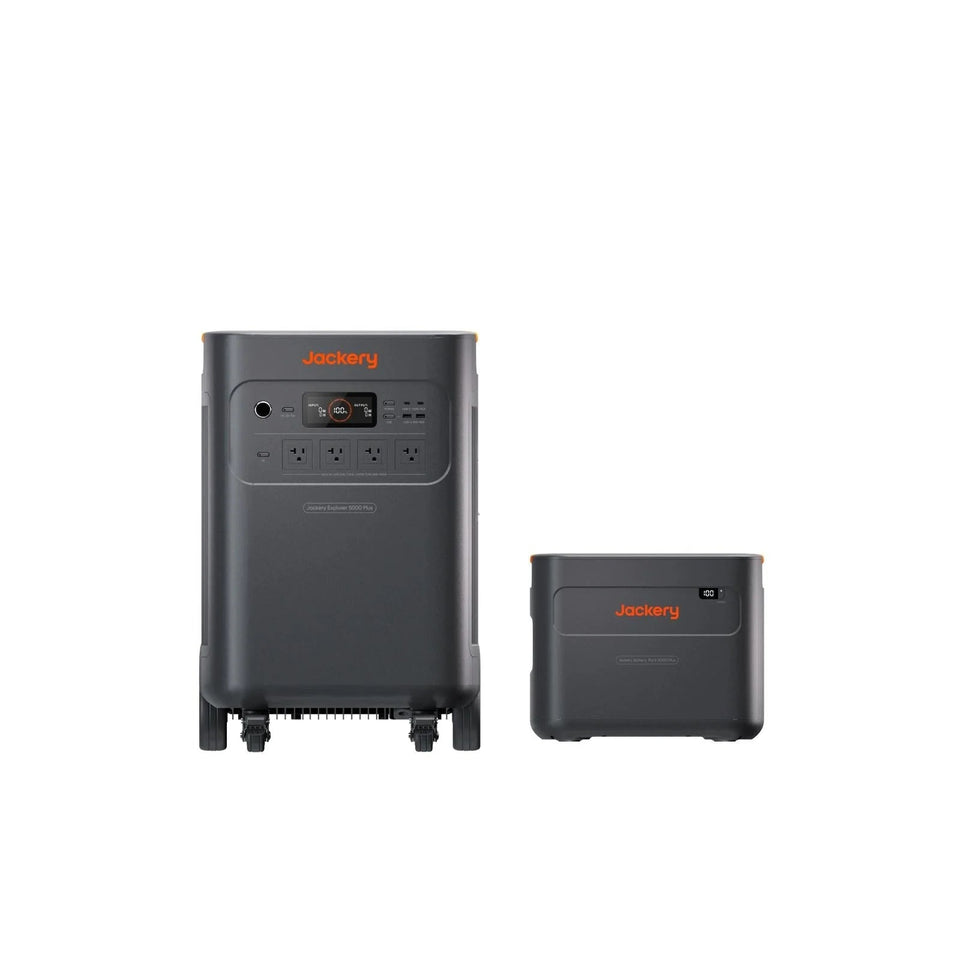
Jackery Explorer 5000 Plus
Combines a 5,040Wh LFP core, 7,200W split-phase output, 14,400W published surge headroom, and both High-PV (135–450V) and Low-PV solar inputs in a single wheeled chassis.

BLUETTI AC200L
Combines a high-efficiency 2,048Wh expandable platform, 1,200W high-voltage solar input (12–145V), and dedicated 30A TT-30R + 48V DC RV outputs at strong street pricing, trading away light weight and built-in wheels.

Pecron E1500LFP
Delivers 1,536Wh, a 2,200W continuous inverter, and a rare 12V/30A XT60 DC port around $599 street price, though its asymmetric 32–95V GX16MF solar input requires careful panel voltage matching.
Frequently Asked Questions
Why do portable solar generators fail during winter off-grid cabin living?+
Two winter bottlenecks cause failure: first, almost all LiFePO4 power stations block solar charging below 32°F (0°C) to prevent permanent cell plating unless they have built-in heating (like the EcoFlow DELTA Pro Ultra rated to -4°F). Second, winter NREL Peak Sun Hours often drop to 2.5–3.5 PSH while short cloudy stretches cut harvest sharply.
What is the advantage of an 80V–450V High-PV input over a 12V–145V or 60V solar port?+
High-PV inputs (80–450V on DELTA Pro Ultra; 135–450V on Jackery 5000 Plus) let you string multiple standard rigid residential solar panels safely inside one efficient high-voltage run, reducing copper cable losses and hitting 4,000W–5,600W recovery. A 12V–145V input like the BLUETTI AC200L bridges 1–3 rigid panels flexibly for vans/cabins, while 60V ports require low-voltage parallel camp setups.
How much battery storage does an off-grid homestead actually need?+
Instead of sizing for 24 hours, budget 2 to 3 days of cloud autonomy. A modest 120V cabin using 2.5kWh/day needs roughly 6kWh–8kWh of expandable LiFePO4 storage, whereas a full-time homestead running a 240V well pump, fridge, chest freezer, and Starlink typically requires 15kWh–30kWh+ stacked with 3,000W–5,600W of solar.
Should off-grid vans run appliances on AC outlets or 12V/48V DC ports?+
Use native DC ports whenever possible. Running a 12V compressor fridge, diesel heater, or Starlink DC setup off an AC inverter wastes 12%–22% in conversion plus constant inverter idle draw (78%–88% net AC efficiency). Direct 12V/30A XT60 or 48V/8A DC ports preserve roughly 88%–93% of battery watt-hours.
Sources & Technical References
- View Source →[1]Manufacturer User ManualEcoFlow Support DocumentationVerified 2026-11-24EcoFlow DELTA Pro Ultra User Manual & Technical Datasheet
Documents High-PV (80-450V, 15A, 4,000W) and Low-PV (30-150V, 15A, 1,600W) limits, operating temps, and UPS switching behavior.
- View Source →[2]Manufacturer SpecificationJackery US OfficialVerified 2026-11-24Jackery Explorer 5000 Plus Official Product Specifications
5,040Wh LFP capacity, 7,200W/14,400W AC specs, High-PV (135-450V) and Low-PV (16-60V) limits, and warranty terms.
- View Source →[3]Manufacturer SpecificationBLUETTI US OfficialVerified 2026-11-24BLUETTI AC200L Portable Power Station Official Specifications
2,048Wh LFP, 2,400W continuous AC, 3,600W Power Lifting mode, NEMA TT-30R + 48V/8A DC RV port, 1,200W solar (12-145V).
- View Source →[4]Government Research ResourceNational Renewable Energy Laboratory (NREL)Verified 2026-11-24PVWatts & US Peak Sun Hours Reference Data
Documents regional peak sun hours and real-world photovoltaic derating factors (ambient heat, angle, shading, controller loss).
- View Source →[5]Third-Party Independent ReviewCNETVerified 2026-11-24CNET Portable Power Station Lab Efficiency & Refrigerator Runtime Benchmarks
Documents standardized refrigerator runtime and round-trip efficiency testing including BLUETTI AC200L (77.76% RTE, >29h fridge test) and Anker SOLIX F3800 (~25.68h fridge stress runtime due to dual-voltage inverter overhead).