Solar-Powered Electric Fences (2026): Energizer Joules, Battery Sizing & Winter Guide
Size solar electric fence energizers by output joules and total wire miles, compare AGM vs. below-32°F LiFePO4 battery limits, and master fence grounding.
Size solar electric fences by output joules and cumulative wire miles—from 0.5–1.5J for cattle to 4.0–8.0J for sheep, goats, and predators needing 4,500–5,500V+ under weed pressure. Deep-cycle 12V AGM tolerates cold charging, whereas standard 12V LiFePO4 packs suffer permanent plating damage if charged below 32°F unless protected by low-temp BMS cutoffs. Keep DC loads off AC inverters to avoid standby waste.

A solar electric fence that snaps sharply at 6,000 volts in July often drops to a harmless 1,400-volt tick by November—and livestock learn within hours when a wire stops hurting. In almost every failed pasture setup, the culprit is not the sunshine itself, but one of three engineering oversights: sizing energizers by linear fence distance instead of total wire miles, ignoring the 32°F lithium freezing-charge trap, or starving the circuit with an undersized grounding rod.
Whether you are protecting a quarter-acre homestead garden from deer, rotating beef cattle across back pastures without barn power, or running temporary polywire paddocks with a portable power station, getting the Joules, battery chemistry, solar array, and grounding math right keeps voltage biting year-round.
Step 1: Size Output Joules by Cumulative Wire Miles & Livestock Type
Two traps catch first-time fence buyers on packaging labels:
- Output Joules vs. “Stored Joules”: Always read Output Joules (actual pulse energy delivered into the fence line), not inflated Stored Joules or exaggerated “clean-condition mile ratings” printed in giant box fonts. A
1.0stored-joule bargain solar unit often outputs only0.6–0.7real joules. - Total Wire Miles, Not Perimeter Distance: A half-mile square pasture strung with 4 hot strands equals 2.0 miles of total charged wire (
0.5 mi × 4 strands), plus extra capacitance from tall grass touching the bottom strand.
| Livestock / Application | Target Minimum Fence Voltage | Recommended Output Joules (Low-Impedance) | Typical Fence Layout & Notes |
|---|---|---|---|
| Backyard Gardens, Dogs & Poultry Netting | 2,500 – 3,500 V | 0.1 – 0.5 Joules | Short single/double-strand perimeter or up to 2–4 rolls of 164 ft poultry netting (watch bottom grass drain on netting!) |
| Horses & Calm Beef Cattle (Clean Lines) | 3,000 – 4,000 V | 0.5 – 1.5 Joules | 1 to 3 miles cumulative wire; horses have sensitive noses and respect wide high-visibility polytape |
| Multi-Strand Cattle & Basic Sheep/Goats | 4,000 – 5,000+ V | 1.5 – 3.5 Joules | 2 to 6 miles cumulative wire; wool/hair insulates sheep and goats, demanding higher voltage |
| Heavy Weeds / Predators (Coyotes, Feral Hogs, Bears) | 5,000 – 7,000+ V | 4.0 – 8.0+ Joules | 5 to 15+ miles cumulative wire; thick fur and prey drive require high-energy low-impedance shocks that push past mild weed contact |
Why low-impedance matters: Modern low-impedance energizers measure resistance across the fence line and dump extra energy instantaneously when weeds touch a bottom wire, rather than collapsing immediately like older high-impedance weed-burner chargers (which also pose higher dry-grass fire risk).
Step 2: Battery Chemistry & Solar Array Sizing (AGM vs. LiFePO4 Under 32°F)
An electric fence pulses roughly once every 1 to 1.5 seconds, 24 hours a day. Even though a 1.0 Joule energizer averages only 1.5 to 4 watts (36–96 Wh/day), a heavy-duty 6.0 Joule unit draws 8 to 15 watts (192–360 Wh/day).
According to National Renewable Energy Laboratory (NREL) solar irradiance benchmarks, winter days across the northern US deliver only 1.5 to 2.5 peak sun hours per day—meaning summer panel sizing fails right when overcast weeks hit. Always size both your battery bank and solar panel to sustain 3 to 5 consecutive sunless days:
| System Tier | Typical Energizer Draw | Minimum Solar Panel Size | Recommended External 12V Battery Reserve |
|---|---|---|---|
Integrated Compact (0.1–0.8J) |
~1W – 3W (~24–72 Wh/day) | 5W – 20W built-in panel |
Built-in 6V / 12V 4.5Ah–12Ah sealed AGM/gel (replace every 2–4 seasons) |
Midsize Pasture (1.0–3.0J) |
~3W – 7W (~72–168 Wh/day) | 30W – 50W 12V panel + PWM/MPPT |
External 12V 50Ah–100Ah deep-cycle AGM (~300–600 Wh usable @ 50% DoD) or protected LFP |
Heavy Ranch / Predator (4.0–8.0J+) |
~8W – 15W (~192–360 Wh/day) | 60W – 100W+ 12V panel + MPPT |
External 12V 100Ah LiFePO4 (~1,024 Wh usable @ 80% DoD) or dual 12V AGM bank |
Crucial Warning: The Below-32°F LiFePO4 Charging Trap
Many homesteaders swap heavy lead-acid fence batteries for lightweight 12V LiFePO4 (LFP) batteries—and discover a nasty surprise after their first hard frost.
- AGM (
12VDeep Cycle): Only tolerates roughly 50% Depth of Discharge (DoD) and loses capacity in bitter cold, lasting 2–4 years—but AGM charges safely below freezing (32°F / 0°C) with basic temperature-compensated solar controllers. - LiFePO4 (
12VLFP): Unlocks 80%–90% usable capacity and 3,000+ cycles (10+ years), holding voltage steady even in freezing discharge down to-4°F (-20°C). However, charging a standard LiFePO4 battery while internal cell temperature sits below32°F (0°C)causes permanent lithium plating on the anode, permanently destroying capacity and creating internal short risks.
How to run LiFePO4 safely in freezing pastures: Either purchase a 12V LFP battery equipped with a verified Low-Temperature Charging Cutoff BMS (or self-heating pad—note the BMS simply pauses winter daytime charging until cell temps rise above 32°F while still feeding your fence), bury an insulated battery vault below frost-line convection swings, or stick with cold-tolerant deep-cycle AGM in unheated Montana/Midwest/Northeast winter setups. Review Battery Storage Temperature & Safety Rules before leaving any lithium unit outdoors in winter.
Step 3: Using Portable Power Stations for Barn-Free Pastures
What if you rotate temporary sheep netting or horse paddocks onto leased acreage with zero AC grid access, and you already own a compact portable power station like an Anker SOLIX C300 (288Wh, 9.1 lbs), BLUETTI AC70 (768Wh, 500W solar), or Goal Zero Yeti 700 (677Wh, IPX4 weather-resistant chassis)?
Portable stations work well for short-term rotational grazing only if you avoid the AC inverter efficiency trap:
- NEVER run a tiny 5W–10W fence energizer off the station’s 120V AC outlet if you can use 12V DC instead. As explained in our Power Station Efficiency Guide, keeping a
300W–1,000WAC inverter switched on burns 8W to 20W of baseline idle overhead just powering internal cooling and logic boards—meaning an AC plug setup drains a288Whbattery roughly two to three times faster than the fence energizer itself requires! - Use a dual-power (
AC/12V DC) energizer connected to the station’s12V/10ADC car port (88%–93%DC efficiency with the AC inverter switched OFF). On the288WhAnker SOLIX C300, feeding a5W12V DC energizer cleanly yields ~45–50+ hours of runtime per charge and tops back up fast via a100W(11–28VVoc) folding solar panel. On a768WhBLUETTI AC70 (independently measured at705–730.6 Whon AC loads, with even higher net DC efficiency), you gain 4 to 6+ days of cloud autonomy. - Weatherproof & Thermal Protection: Unlike sealed agricultural energizer boxes, almost all portable power stations are non-waterproof (
IP20) indoor electronics. Even theIPX4splash-resistant Goal Zero Yeti 700 should sit inside a ventilated plastic livestock tote or weather hood out of direct rain/snow—and every one of those three models enforces a32°F (0°C)minimum charging floor (operatingTempCharge), meaning you must bring the unit indoors to charge during freezing weather.
Step 4: Grounding Rods & Vegetation-Drain Maintenance
Electric fencing is an open-circuit loop until an animal touches the hot wire and stands on the earth. Electrons must travel down through the animal’s hooves, through the soil back to your grounding rods, and up the ground wire back into the energizer. Weak grounding accounts for roughly 80% of disappointing fence shocks.
- Minimum Ground Rod Rule: Never rely on a rusty 2-foot T-post as your fence ground. Small
<0.5Jgarden chargers need at least one 4-to-6-foot ground rod driven in damp soil; 1.5–8.0+ Joule pasture energizers generally require three 6-to-8-foot ground rods spaced at least 10 feet apart, clamped together in a continuous unbroken ground wire. - Avoid Dissimilar Metals: Do not clamp copper ground wire onto galvanized steel ground rods—moisture triggers rapid galvanic corrosion (white powder buildup) that breaks electrical continuity. Match galvanized rods with galvanized wire/clamps, or copper-clad rods with copper clamps.
- Control Vegetation Drain: Green wet weeds leaning against hot wires bleed pulse energy straight into the soil. Under heavy spring grass growth, either spray/weed-whack under bottom wires, raise the lowest hot strand slightly, or install cut-out switches along pasture zones so you can isolate dead shorts quickly with a digital electric fence fault finder (which shows current flow direction and voltage drop to the exact damaged insulator).
- Winter & Dry-Soil Ground Return: When summer soil turns bone dry—or winter ground freezes solid—earth conductivity plummets. Running an alternating hot-and-ground multi-wire fence (where one strand connects straight back to the energizer’s ground terminal instead of relying purely on soil moisture) forces animals touching both wires to complete a full-strength circuit regardless of snow or drought.
Need help calculating portable battery runtime and panel recharge windows for remote homestead gear? Test real overcast vs. sunny recharge speeds in our Solar Charging Time Estimator or model continuous DC wattage inside the Runtime Calculator.

Models Discussed in This Article
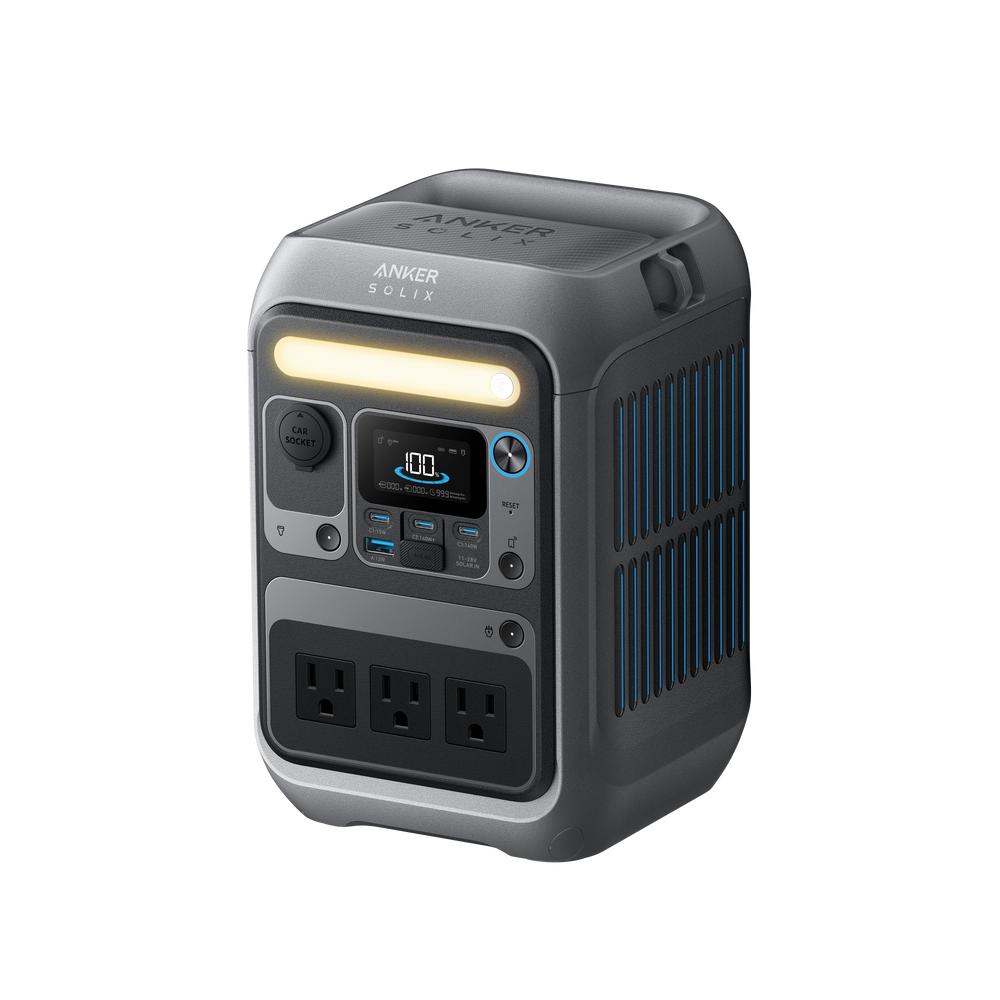
Anker SOLIX C300
A 9.1 lb vertical LiFePO4 station delivering 300W AC, dual 140W USB-C ports, and <10 ms UPS backup for routers, laptops, and day trips — just don't confuse it with the DC-only C300 DC or expect appliance runtime.
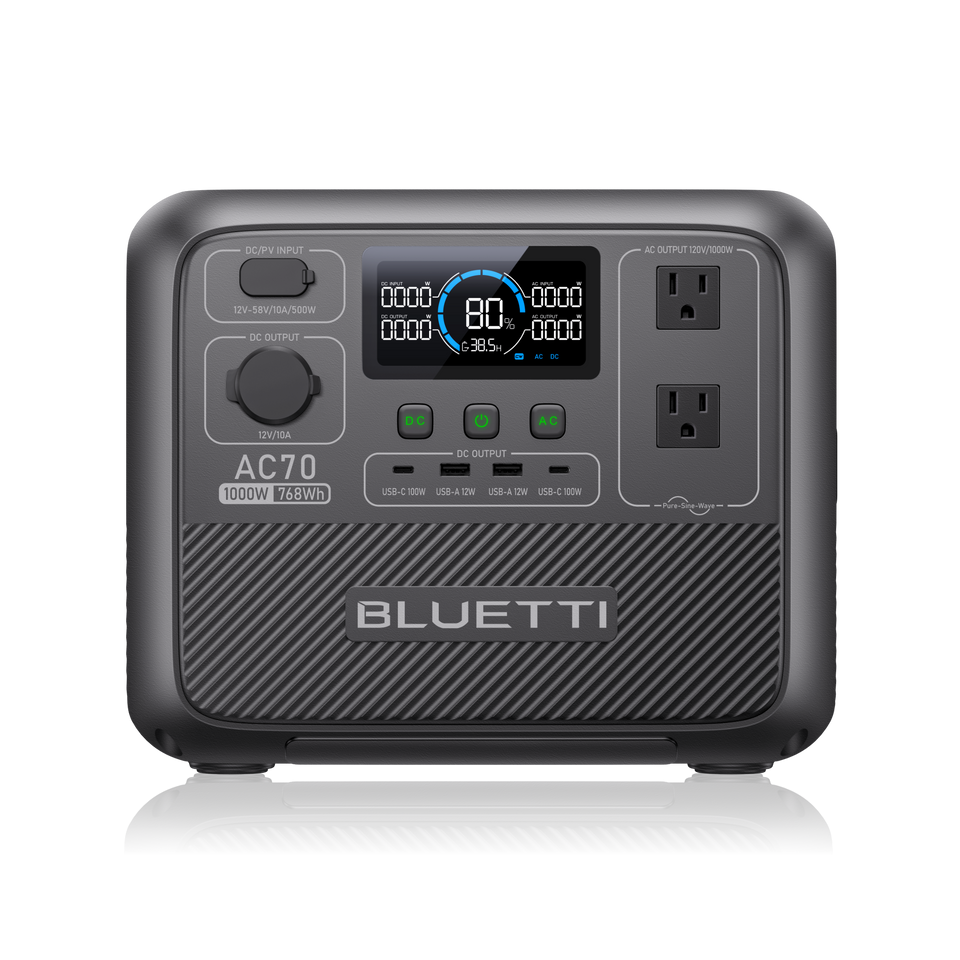
BLUETTI AC70
With 705–730.6 Wh of independently measured usable AC output from a 768Wh battery and 500W solar input at ~$399–$449 street price, the AC70 punches above typical 500Wh–700Wh units.
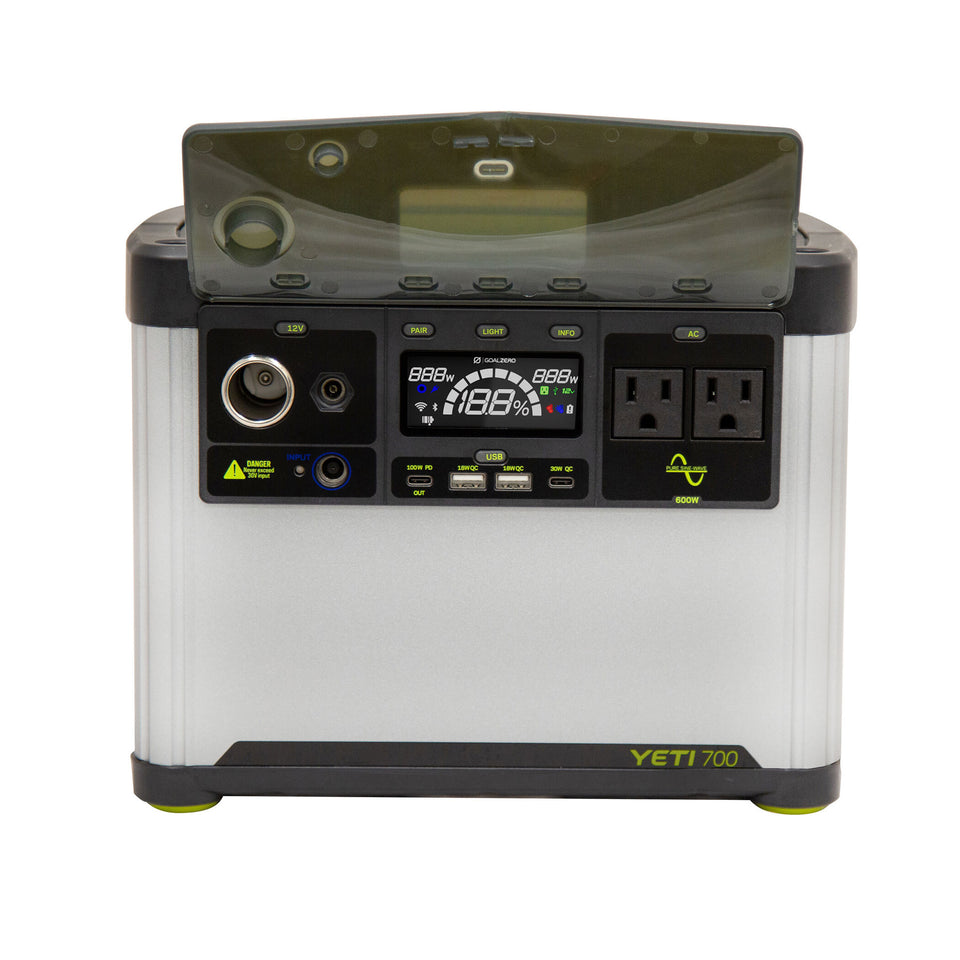
Goal Zero Yeti 700
Prioritizes IPX4 splash resistance, 4,000-cycle LFP longevity, and US-based warranty support over raw inverter wattage or solar charging speed.
Frequently Asked Questions
How many joules does a solar electric fence energizer need per mile?+
Size by cumulative wire miles (a 1-mile, 4-strand perimeter equals 4 miles of wire), not linear fence distance. Use 0.5–1.5 output joules for 1–3 miles of clean cattle/horse wire, 1.5–3.0 output joules for 2–5 miles or basic sheep containment, and 4.0–8.0+ output joules for long multi-strand pastures, heavy weed contact, or coyote/bear predator deterrence.
Why shouldn't I charge a standard 12V LiFePO4 battery on a winter solar fence below 32°F?+
While LiFePO4 cells can discharge safely down to -4°F (-20°C), forcing solar charging current into standard LiFePO4 below 32°F (0°C) causes irreversible lithium plating on the anode and ruins the battery. For unheated northern pastures, either use an external LiFePO4 battery with built-in low-temperature charging cutoff/self-heating or choose cold-tolerant deep-cycle AGM.
Can a small portable power station run an electric fence at a barn-free pasture?+
Yes, provided you run a 12V DC energizer from the station's 12V DC port with the AC inverter turned off—otherwise the AC inverter's 8W–20W standby draw consumes more power than the 3W–15W fence charger itself. Always shelter portable power stations inside a dry ventilated box above 32°F.
Why does my solar electric fence drop in voltage even when the battery tests full?+
Up to 80% of low-voltage fence problems come from inadequate grounding or wet weeds shorting the hot wire, not dead batteries. Larger 2–8 Joule energizers typically need three 6-to-8-foot galvanized steel ground rods spaced 10 feet apart in moist soil (matching wire/clamp metals to prevent corrosion).
Sources & Technical References
- View Source →[1]Manufacturer SpecificationAnker SOLIX US OfficialVerified 2026-11-24Anker SOLIX C300 Portable Power Station (Model A1722) Specifications
288Wh LFP AC-equipped model (distinct from DC-only C300 DC), 300W AC, 600W SurgePad, 100W XT60 solar, <10ms UPS.
- View Source →[2]Manufacturer SpecificationBLUETTI US OfficialVerified 2026-11-24BLUETTI AC70 Portable Power Station Official Specifications
768Wh LFP, 1,000W continuous AC, 2,000W Power Lifting resistive mode, 500W MPPT solar (12-58V, 10A), 950W Turbo AC charge.
- View Source →[3]Manufacturer SpecificationGoal Zero OfficialVerified 2026-11-24Goal Zero Yeti 700 Portable Power Station Specifications
677Wh LFP, 600W AC, 1,000W surge, 200W solar max, IPX4 weather-resistant chassis, 5-year warranty.
- View Source →[4]Government Research ResourceNational Renewable Energy Laboratory (NREL)Verified 2026-11-24PVWatts & US Peak Sun Hours Reference Data
Documents regional peak sun hours and real-world photovoltaic derating factors (ambient heat, angle, shading, controller loss).