EcoFlow RIVER Max Plus Specs, Real-World Runtime Math & 2026 Alternatives
Detailed 720Wh EcoFlow RIVER Max Plus runtime math (78%–85% AC vs. 88%–92% DC), X-Boost voltage limits, and spec comparison vs. RIVER 2 Pro, AC70, and C300.
At 720Wh total NCM capacity and 600W continuous AC output (1,200W surge), a healthy EcoFlow RIVER Max Plus delivers roughly 562–612Wh via AC outlets (78%–85% efficiency) or 634–662Wh via 12V/USB-C DC (88%–92%). While X-Boost lowers voltage to heat hair dryers, inductive motors above 600W should avoid it. Modern LFP rivals—RIVER 2 Pro, BLUETTI AC70, and Anker SOLIX C300—offer longer 3,000+ cycle warranties.

Old retail blurbs and TV home-shopping segments once pitched the EcoFlow RIVER Max Plus as a 1,800W pocket powerhouse capable of running microwaves, space heaters, and full-size kitchen appliances effortlessly. Strip away the promotional copy and look at the electrical nameplate: the RIVER Max Plus is a 720Wh modular NCM pack (360Wh base + 360Wh extra battery) behind a 600W continuous inverter.
Understanding that gap between 600W continuous power, 1,600W–1,800W voltage-dropped X-Boost, and real-world usable watt-hours is the fastest way to predict exactly how long your laptop, CPAP, mini-fridge, or router will stay alive—and whether a current-generation LFP station belongs on your shortlist instead.
Usable Watt-Hours: 720Wh AC vs. DC Conversion Math
Battery capacity (720Wh) describes chemical storage inside the cells, not delivered energy at your device cord. Every portable power station spends energy on two invisible overheads: step-up/step-down DC-to-AC conversion heat and background Battery Management System (BMS) / inverter standby draw (often 10W–20W continuously whenever the AC switch is turned on).
Using transparent real-world efficiency windows for a healthy 720Wh pack:
- 120V AC Outlets (
78%–85%Efficiency):720Wh × 0.78 to 0.85=562 Wh to 612 Whusable AC energy. Light AC loads under40Wland closer to78%(or lower if the inverter sits idle for 20+ hours), while moderate150W–300Wloads approach85%. - Regulated 12V DC & USB-C Outputs (
88%–92%Efficiency):720Wh × 0.88 to 0.92=634 Wh to 662 Whusable DC energy. Bypassing the AC inverter preserves roughly70–100 Whof runtime on every full discharge cycle.
(Note: Because all RIVER Max Plus units use 800-cycle NCM cells manufactured several years ago, a used or aged pack with 80% remaining State of Health drops those figures by another fifth—down to roughly 450–490 Wh AC.)
Real-World Runtime Scenarios on a Healthy 720Wh Pack
| Appliance / Scenario | Typical Power Draw | Recommended Port | Estimated Runtime Formula | Realistic Runtime (Healthy Pack) |
|---|---|---|---|---|
| CPAP (No Humidifier, DC Converter) | 15W–20W |
12V Car / DC Socket |
634–662 Wh ÷ 18W |
35 to 42 hrs (~4–5 nights) |
| CPAP (Heated Humidifier On, AC Brick) | 55W–75W (+ inverter idle) |
120V AC Outlet |
562–612 Wh ÷ 65W |
8.5 to 11 hrs (~1 night) |
| Home Office (Laptop + Fiber/Wi-Fi Router) | 45W–65W combined |
100W USB-C + 12V DC / AC |
580–640 Wh ÷ 55W |
10 to 13 hrs |
12V Portable Compressor Fridge (45W cycling) |
15W–22W average duty cycle |
12V Regulated Car Port |
634–662 Wh ÷ 18W |
29 to 40 hrs (ambient-dependent) |
LED Camp & Outage Lighting (2 × 7W bulbs) |
14W–16W |
12V DC / USB-A |
634–662 Wh ÷ 15W |
40 to 44 hrs |
Compact 120V Dorm Mini-Fridge (85W cycling) |
35W–45W avg (+ AC idle) |
120V AC Outlet |
562–612 Wh ÷ 50W |
11 to 14 hrs |
Full-Size Microwave (1,100W–1,500W) |
Exceeds 600W continuous |
Not Compatible | Overload / X-Boost fault | Not Recommended |
You can plug your exact wattage numbers into our interactive Runtime Calculator or review conversion physics in Understanding Power Station Efficiency.
Why X-Boost Runs Hair Dryers—But Risks Inductive Motors Above 600W
The single biggest source of buyer regret on 600W EcoFlow units comes from misunderstanding X-Boost. On paper, the RIVER Max Plus specifies:
600Wcontinuous pure sine wave AC output1,200Wbrief startup surge1,600W–1,800WX-Boost mode (varies by revision/firmware; EcoFlow recommends keeping X-Boost resistive loads under1,200W)
When a simple resistive heating tool—say a 1,200W travel hair dryer, soldering iron, or analog drip coffee maker—plugs in with X-Boost enabled, the inverter deliberately drops output AC voltage (often below 80V–95V) so total power (Volts × Amps) stays inside the 600W hardware ceiling. A resistive heating coil tolerates low voltage calmly: it simply warms up slower and takes longer to dry hair or boil water.
Inductive motors and digital electronics behave differently:
- Compressors inside household refrigerators, air conditioners, well pumps, and power-tool motors draw more amperage when voltage drops, increasing winding heat and frequently tripping thermal or over-current shutdowns.
- Precision electronics (desktop PCs, induction cooktops, variable-speed espresso machines, digital microwaves) expect steady
110V–120Vmains power and will refuse to boot or throw error codes under X-Boost voltage sag.
Treat the RIVER Max Plus strictly as a 600W continuous power station for anything motorized or microprocessor-controlled, as detailed in Watt-Hours vs. Watts Explained.
Spec-by-Spec: RIVER Max Plus vs. Three 2026 LFP Alternatives
If you are cross-shopping compact backup stations today, compare the legacy RIVER Max Plus directly against EcoFlow’s current RIVER 2 Pro, the high-efficiency BLUETTI AC70, and the featherweight Anker SOLIX C300:
| Specification | EcoFlow RIVER Max Plus (Legacy) | EcoFlow RIVER 2 Pro | BLUETTI AC70 | Anker SOLIX C300 (Model A1722) |
|---|---|---|---|---|
| Rated Capacity | 720 Wh (360Wh + 360Wh modular) |
768 Wh (single block) |
768 Wh (expandable via DC) |
288 Wh (single tower) |
| Battery Chemistry & Life | NCM (800 cycles to 80%) |
LiFePO4 (3,000+ cycles) |
LiFePO4 (3,000+ cycles) |
LiFePO4 (3,000+ cycles) |
| Continuous / Surge AC | 600W / 1,200W surge |
800W / 1,600W X-Boost |
1,000W / 2,000W boost |
300W / 600W SurgePad |
| Verified Usable AC Data | ~562–612 Wh (est. 78–85%) |
~600–675 Wh (est. 78–88%) |
705 Wh (250W) / 730.59 Wh (136W) (measured) |
~225–253 Wh (est. 78–88%) |
| AC Outlets | 3 × 120V |
4 × 120V |
2 × 120V |
3 × 120V |
| USB-C Fast Ports | 1 × 100W USB-C |
1 × 100W USB-C |
2 × 100W USB-C |
2 × 140W USB-C PD + 1 × 15W |
| Solar Input & Voc Limit | 200W (10V–25V, 12A) |
220W (11V–50V, 13A) |
500W (12V–58V, 10A) |
100W (11V–28V, 8.2A) |
| AC Wall Charging Time | ~1.6 hrs (660W X-Stream) |
~70 mins (940W X-Stream) |
~1.5 hrs (950W Turbo) |
~68 mins (330W HyperFlash) |
| Weight | 17.6 lbs (~11–12 lbs w/o bottom) |
17.2 lbs |
22.5 lbs |
9.1 lbs |
| UPS Transfer Rating | <30 ms EPS |
<30 ms EPS |
<=20 ms UPS |
<10 ms UPS |
| 2026 Market Status | Discontinued (used/clearance) | Current (~$399–$549 street) |
Current (~$349–$449 street) |
Current (~$189–$249 street) |
Which Replacement Matches Your Exact Load?
- For 700Wh–800Wh Efficiency & Solar Speed Under
$450: The BLUETTI AC70 stands out with1,000Wcontinuous output,500Wsolar charging, and third-party lab tests from APH Networks (730.59 Whdelivered at136W) and PowerOffGrid (705 What250W), documenting roughly90%–92.5%net AC efficiency. - For Lighter Weight + Wi-Fi + Fast
70-MinWall Charging: The EcoFlow RIVER 2 Pro beats the legacy RIVER Max Plus in every measurable spec (768WhLFP,800WAC,11–50Vsolar,17.2 lbs, 5-year warranty) while weighing slightly less. - For Ultralight Router UPS & Dual-Laptop Travel Under
$250: The9.1 lbAnker SOLIX C300 (confirm Model A1722 with AC outlets, not the AC-less C300 DC) delivers<10 msrouter/modem UPS backup and dual140WUSB-C PD ports—and drops weight in half if you only need overnight communications rather than fridge runtime. - For Kitchen Appliances & True Outage Muscle: Skip sub-1kWh units altogether and compare the
1,024Wh / 1,800WEcoFlow DELTA 3 Plus (<10 msHID UPS,1,000Wsolar) in our Best 1,000Wh Power Stations guide.
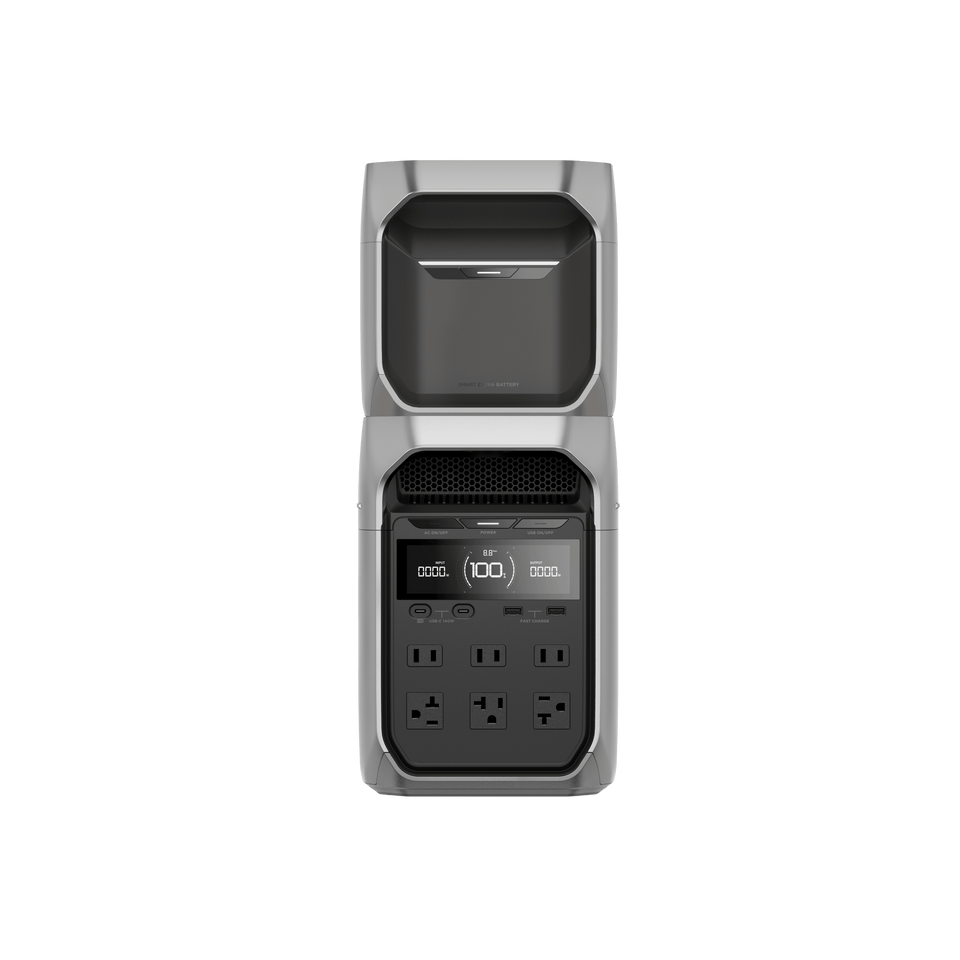
Models Discussed in This Article
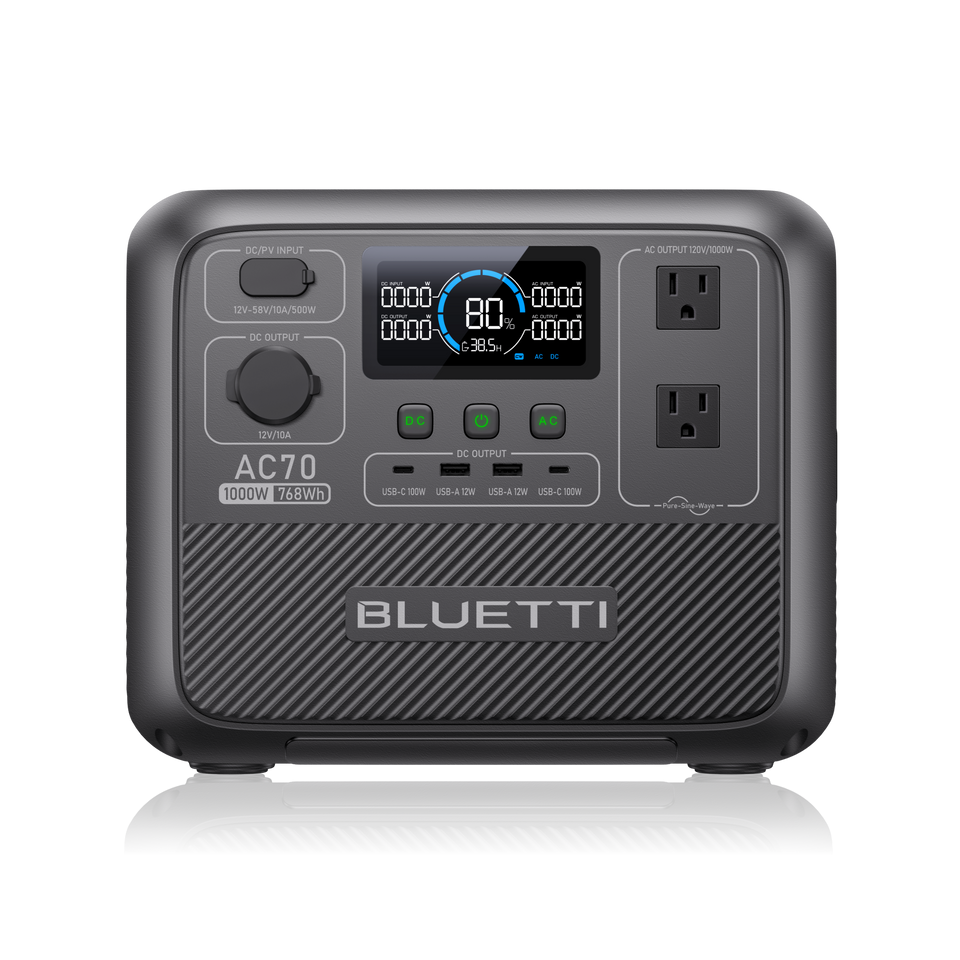
BLUETTI AC70
With 705–730.6 Wh of independently measured usable AC output from a 768Wh battery and 500W solar input at ~$399–$449 street price, the AC70 punches above typical 500Wh–700Wh units.
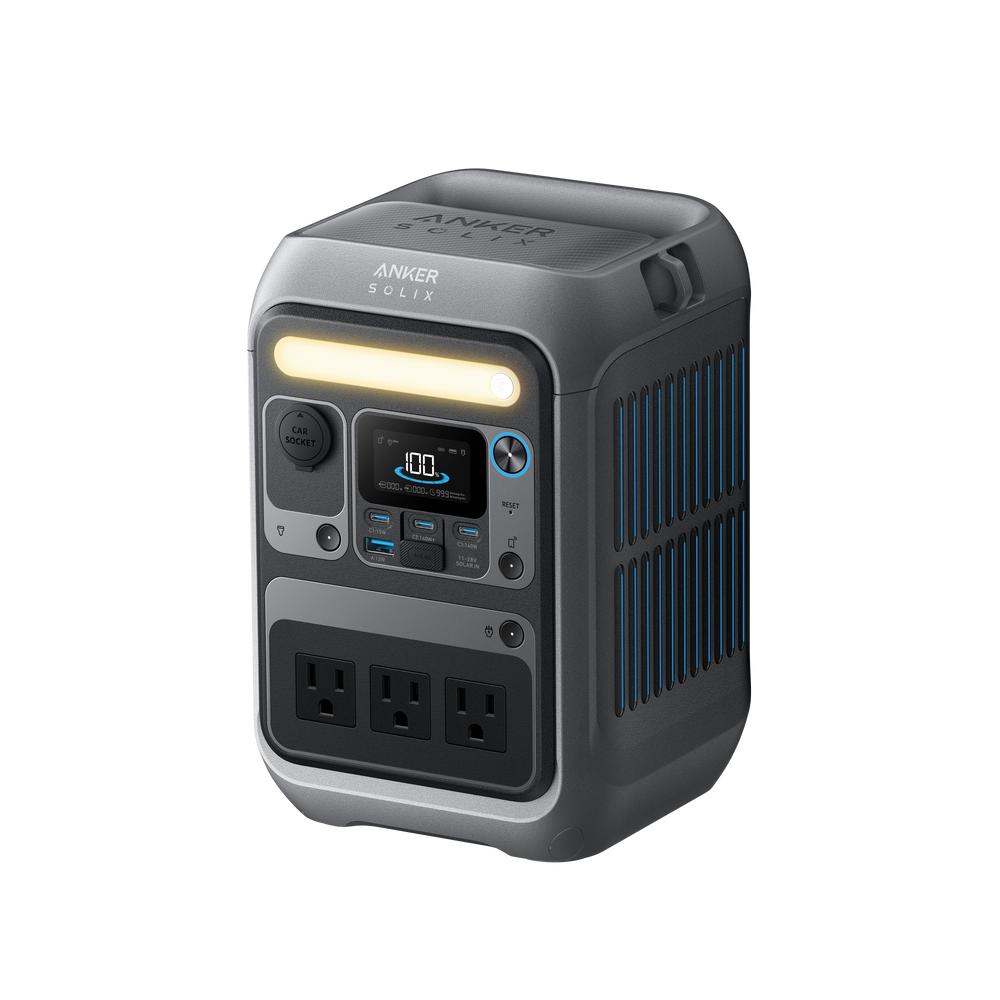
Anker SOLIX C300
A 9.1 lb vertical LiFePO4 station delivering 300W AC, dual 140W USB-C ports, and <10 ms UPS backup for routers, laptops, and day trips — just don't confuse it with the DC-only C300 DC or expect appliance runtime.
EcoFlow DELTA 3 Plus
Packs 1,000W dual-MPPT solar charging, sub-1-hour AC replenishment, and a sub-10 ms HID-capable UPS into a 27.6 lb chassis, making it more versatile than non-Plus 1kWh units.
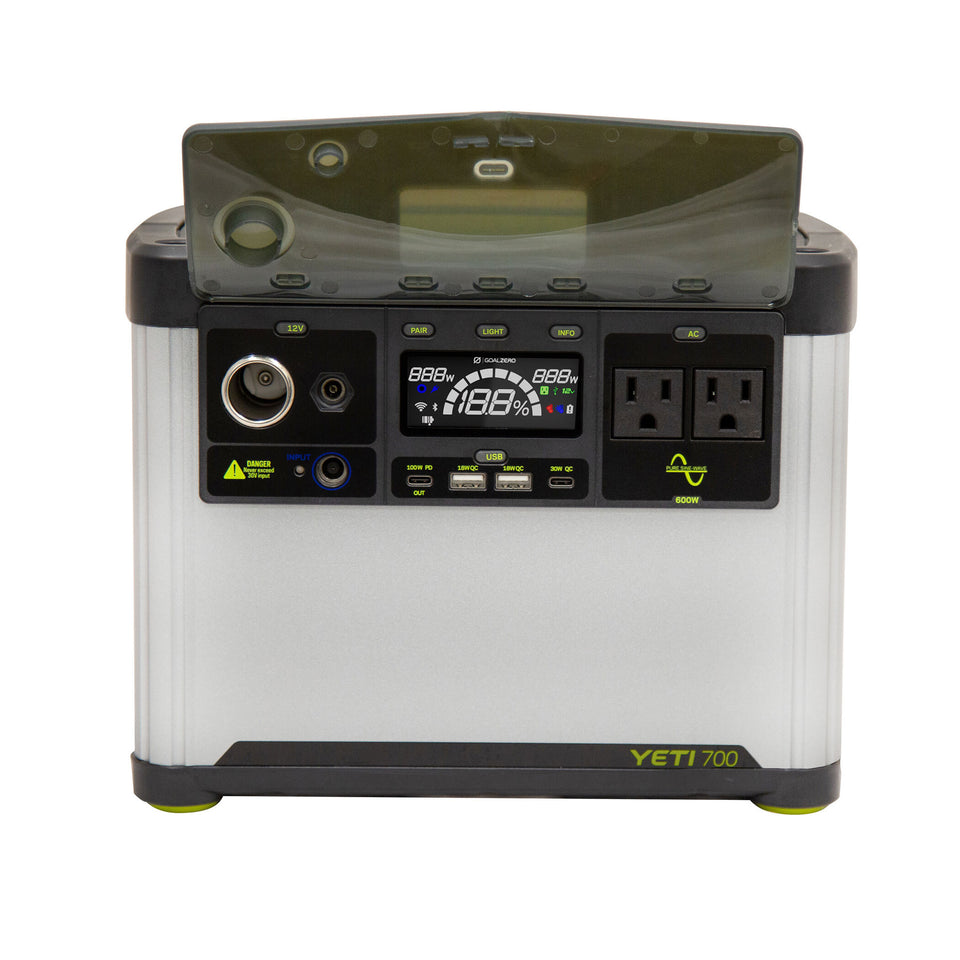
Goal Zero Yeti 700
Prioritizes IPX4 splash resistance, 4,000-cycle LFP longevity, and US-based warranty support over raw inverter wattage or solar charging speed.
Frequently Asked Questions
How many actual watt-hours can I draw from a 720Wh EcoFlow RIVER Max Plus?+
No 720Wh battery outputs 720Wh at the wall socket. On a healthy RIVER Max Plus, DC-to-AC inverter conversion and idle overhead typically yield 562Wh–612Wh through the 120V AC ports (78%–85% efficiency), while direct 12V car and 100W USB-C DC outputs retain roughly 634Wh–662Wh (88%–92%).
Can X-Boost let a 600W RIVER Max Plus run a microwave or full-size refrigerator?+
X-Boost should not be counted on for microwaves or heavy compressor starts above 600W. X-Boost keeps wattage under 600W by lowering output RMS voltage—which works on simple resistive heaters like hair dryers—but digital microwave transformers, coffee maker control boards, and inductive fridge motors often stall or fault on under-voltage AC.
How long will a 720Wh power station run a CPAP machine overnight?+
With heated humidification and heated tubing turned off and powered via a 12V/24V DC converter (roughly 15W–20W draw), a healthy 720Wh battery lasts roughly 31 to 44 hours—four to five nights. Plugging the same CPAP into the 120V AC inverter with the humidifier set to high (55W–75W plus inverter overhead) drops runtime to roughly 7.5 to 11 hours.
How does the BLUETTI AC70 compare against the legacy RIVER Max Plus for runtime efficiency?+
Although both carry roughly 720Wh–768Wh nameplate packs, the BLUETTI AC70 uses 3,000+ cycle LiFePO4 cells, a 1,000W continuous inverter, and achieved 705Wh (at 250W) to 730.59Wh (at 136W) of independently measured usable AC output in PowerOffGrid and APH Networks tests—surpassing legacy NCM units in both raw AC energy and longevity.
Sources & Technical References
- View Source →[1]Manufacturer SpecificationEcoFlow US OfficialVerified 2026-11-25EcoFlow RIVER 2 Pro Portable Power Station Specifications
768Wh LiFePO4 portable station, 800W continuous AC (1,600W surge/X-Boost), 220W solar input (11-50V, 13A), 17.2 lbs weight.
- View Source →[2]Manufacturer SpecificationBLUETTI US OfficialVerified 2026-11-24BLUETTI AC70 Portable Power Station Official Specifications
768Wh LFP, 1,000W continuous AC, 2,000W Power Lifting resistive mode, 500W MPPT solar (12-58V, 10A), 950W Turbo AC charge.
- View Source →[3]Manufacturer SpecificationAnker SOLIX US OfficialVerified 2026-11-24Anker SOLIX C300 Portable Power Station (Model A1722) Specifications
288Wh LFP AC-equipped model (distinct from DC-only C300 DC), 300W AC, 600W SurgePad, 100W XT60 solar, <10ms UPS.
- View Source →[4]Third-Party Independent ReviewAPH NetworksVerified 2026-11-24BLUETTI AC70 Portable Power Station Load Test Review
Constant 136W AC load discharge test measured 730.59 Wh usable output (~95% of rated 768Wh cell capacity; ~92.5% net inverter efficiency).
- View Source →[5]Third-Party Independent ReviewPowerOffGridVerified 2026-11-24BLUETTI AC70 Usable AC Capacity & Inverter Efficiency Test
250W continuous resistive load AC discharge test recorded 705 Wh usable AC output (~90% overall system efficiency).